

Many businesses, these days, use different types of tools and technologies to complete certain tasks. In fact, recent data by TechRadar shows that modern companies utilize an average of 112 SaaS applications, while large enterprises leverage up to 447 different tools. Considering the overall expenditure on these tools, organizations waste almost 30 to 50% of their SaaS budgets on unused licenses. Thus, when there is no centralized consumption and visibility platform, massive monetary losses occur unintentionally due to a lack of oversight. That’s where well-thought-out digital transformation strategies come into the picture. They are strategic and cohesive efforts to leverage technology, including SaaS, to transform business operations, enhance customer experiences, and foster agility.
Once you adopt a well-planned digital transformation strategy for business growth, you get rid of an uncontrolled collection of disconnected software applications across your organization, which not only leads to considerable waste of money but also creates security risks and inefficiency.
In this blog, we will talk about what a digital transformation strategy is, why it is essential for modern businesses, the core pillars that drive successful transformation, the key people involved in the process, and the step-by-step approach to building a business digital transformation strategy. Apart from that, we will also explore how digital transformation strategies differ for enterprises and startups, along with the capabilities businesses need to successfully adapt, scale, and achieve long-term growth through digital transformation planning. First, let’s begin with:
Understanding Digital Transformation Strategy: A Blueprint for Business Growth
A digital transformation strategy is a comprehensive plan to use digital solutions for improving the physical aspects of your business across manufacturing, engineering, and service channels. You can consider digital transformation strategies as broad business strategies that are guided by business outcomes instead of technology to achieve improved operational efficiency, enhanced customer experiences, and increased revenue growth.
Just to let you know, the total spending on digital transformation worldwide was estimated to be 2.58 trillion U.S. dollars in 2025, which is expected to grow to 3.88 trillion by 2028. So, if your business is struggling with poor operational efficiency, slow decision-making, fragmented customer data, high manual error rates, or weak security, partnering with a leading digital transformation company to implement AI-driven business transformation makes sense.
The 4 Core Pillars of a Successful Digital Transformation Strategy
Every successful digital adoption strategy relies on four interconnected pillars, irrespective of the scale or industry of the business. Here is a list of all the pillars that operate at the same time and strengthen each other.
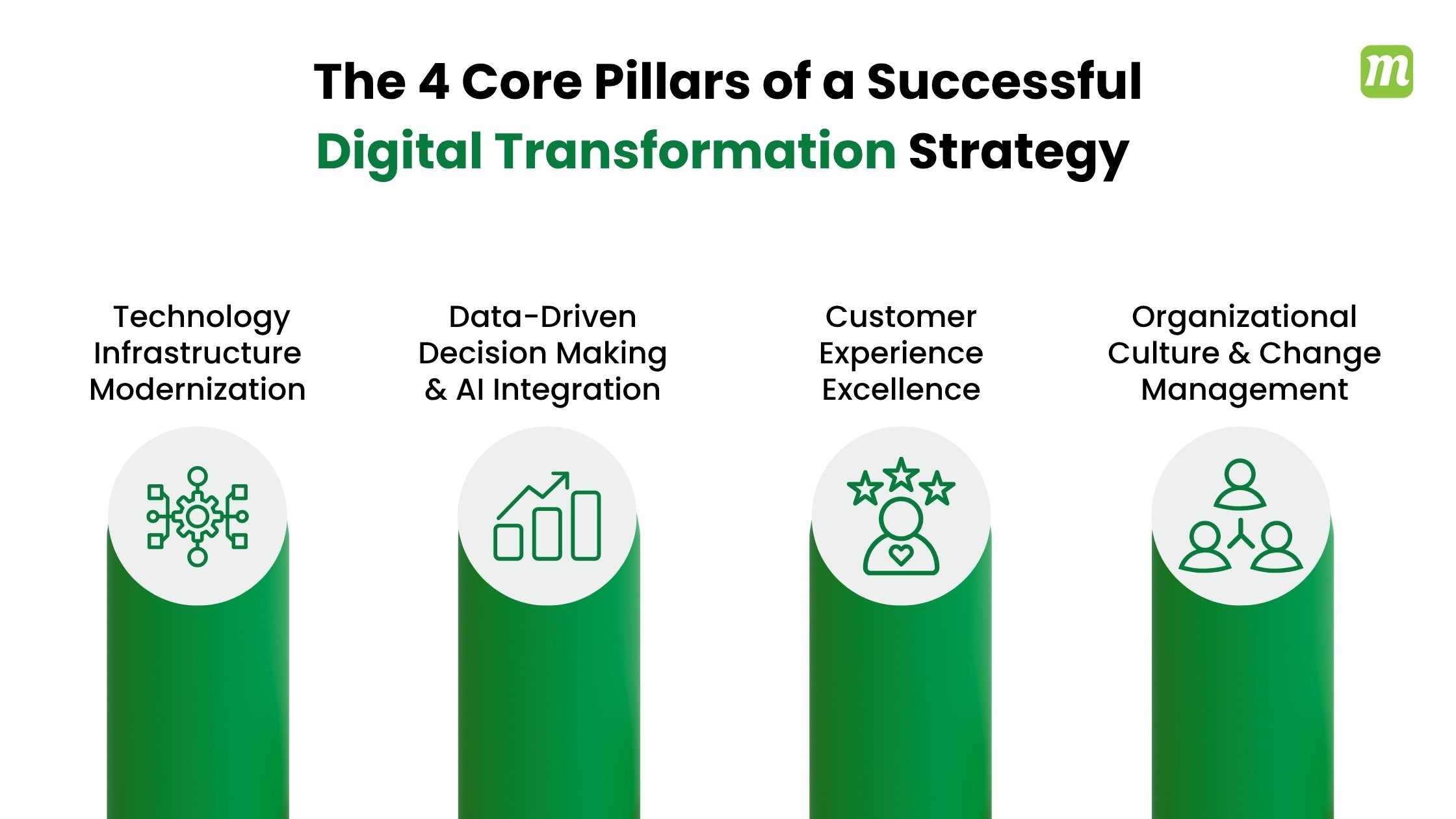
Pillar 1: Technology Infrastructure Modernization
It includes API-first design, cloud architecture, microservices decoupling (designing services to operate independently), container orchestration, and abandoning legacy systems that create delivery friction. This is the foundation that the rest of the things are built on.
Pillar 2: Data-Driven Decision Making & AI Integration
To make this happen, you need to have a unified data architecture, analytics pipeline, ML model deployment (MLOps), and AI business technology integration into operational workflows. Keep in mind that feeding high-quality data to AI models is extremely important to ensure data-driven decision-making works effectively. And if you need help in transforming huge, fragmented data into actionable insights, connect with the best data engineering services provider in the market.
Pillar 3: Customer Experience Excellence
This refers to omnichannel consistency, real-time personalization, self-service capabilities, and reduction in friction at every customer-facing touchpoint. Just so you know, customer experience (CX) is the area where digital transformation becomes visible to the market.
Pillar 4: Organizational Culture & Change Management
Culture is the most underestimated obstacle in customer-centric transformation. Therefore, you need to proceed with executive sponsorship, agile mindset adoption, digital upskilling programs, and building the psychological safety net required for teams to experiment. This is the right approach to work on the enterprise digital transformation roadmap.
Why Businesses Can No Longer Ignore Digital Transformation
Digital transformation is no longer optional for modern businesses. In today’s fast-changing digital ecosystem, companies must adopt smarter technologies and cutting-edge processes to stay competitive, improve customer experiences, and drive long-term growth. Here is why a digital innovation strategy for businesses has become essential:
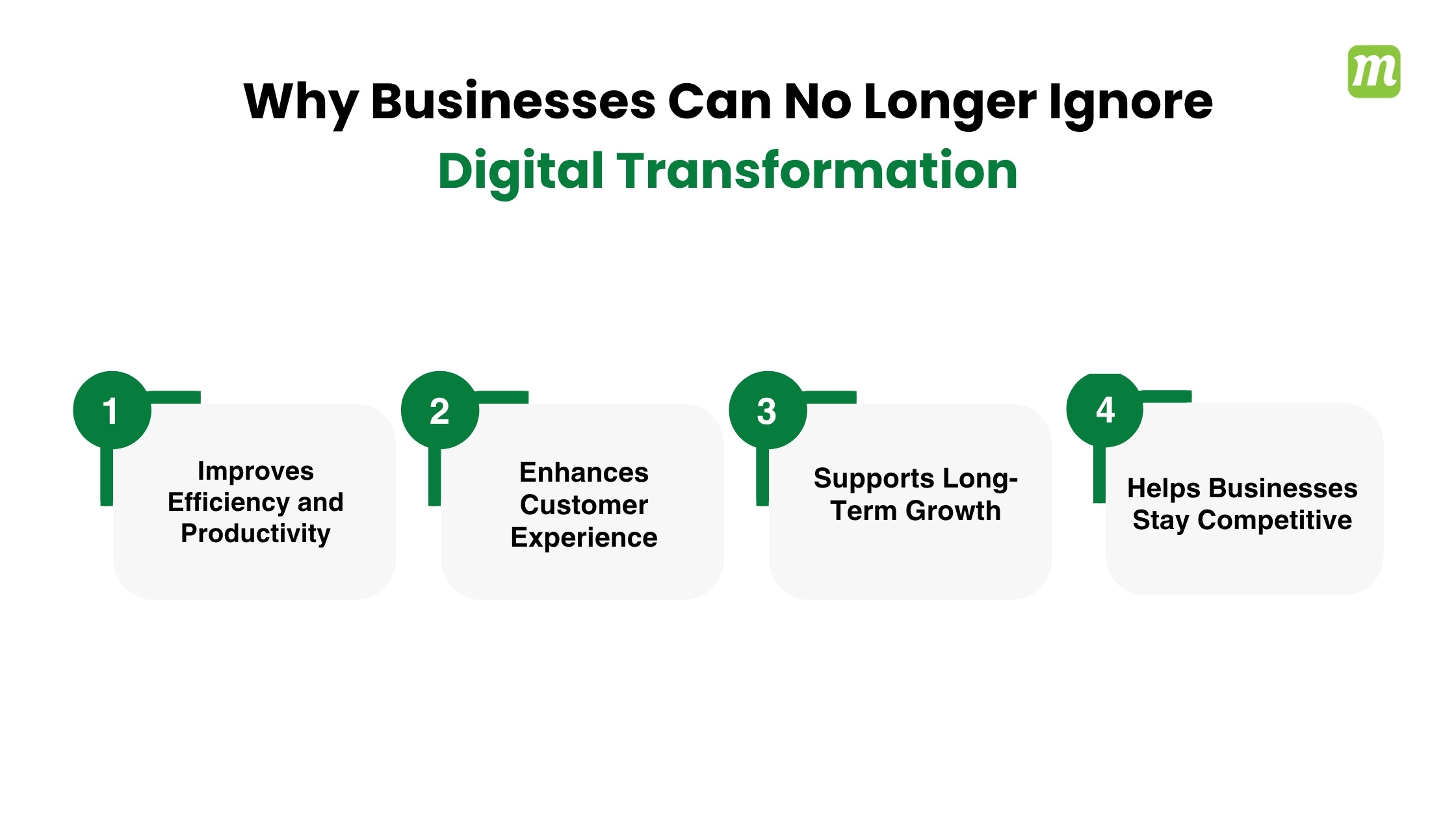
1. Improves Efficiency and Productivity
A successful cloud transformation strategy helps businesses automate repetitive tasks, streamline workflows, and reduce manual effort. This improves operational efficiency, minimizes errors, and allows teams to focus on more strategic work.
2. Enhances Customer Experience
Today’s customers expect fast, seamless, and personalized digital experiences. So, businesses can meet these expectations through customer experience transformation, where teams use state-of-the-art platforms, data-driven insights, and intelligent technologies to improve customer engagement and satisfaction.
3. Supports Long-Term Growth
Technology trends are constantly changing out there. Hence, organizations chasing innovation-led growth are better positioned for long-term success, scalability, and market relevance.
4. Helps Businesses Stay Competitive
As industries continue to evolve, companies that fail to implement the latest technologies are on the verge of falling behind competitors. The agile transformation strategy enables businesses to innovate faster, respond to market changes quickly, and stay ahead in a competitive environment.
Key Stakeholders Involved in Building a Business Digital Transformation Strategy
A successful business digital transformation strategy should involve people from different departments and leadership levels across the organization. It’s because adopting a collaborative approach assists business owners in making better decisions and achieving impressive results.
Here are the key participants involved in customer experience and operational efficiency transformation:
1. C-Suite Decision-Makers: Executives like the CEO, CIO, and CTO provide the vision, approve budgets, and ensure the workflow automation strategy supports long-term business goals.
2. Digital Transformation Leaders: Many companies appoint a dedicated team or manager to supervise digital transformation projects and keep everything on track.
3. Cross-Functional Teams: Employees from IT, operations, sales, marketing, and other departments help ensure all business needs are considered.
4. Technology Partners and Experts: External partners provide technical expertise, implementation support, and industry knowledge to help businesses execute AI-driven business transformation successfully.
How to Build a Digital Transformation Strategy in 7 Easy Steps
Learning “how to build a digital transformation strategy” is not only about adopting new technology. It is also about improving the way a business works, serves customers, and prepares for future growth. Here are seven simple steps you need to understand to create an effective digital transformation strategy:
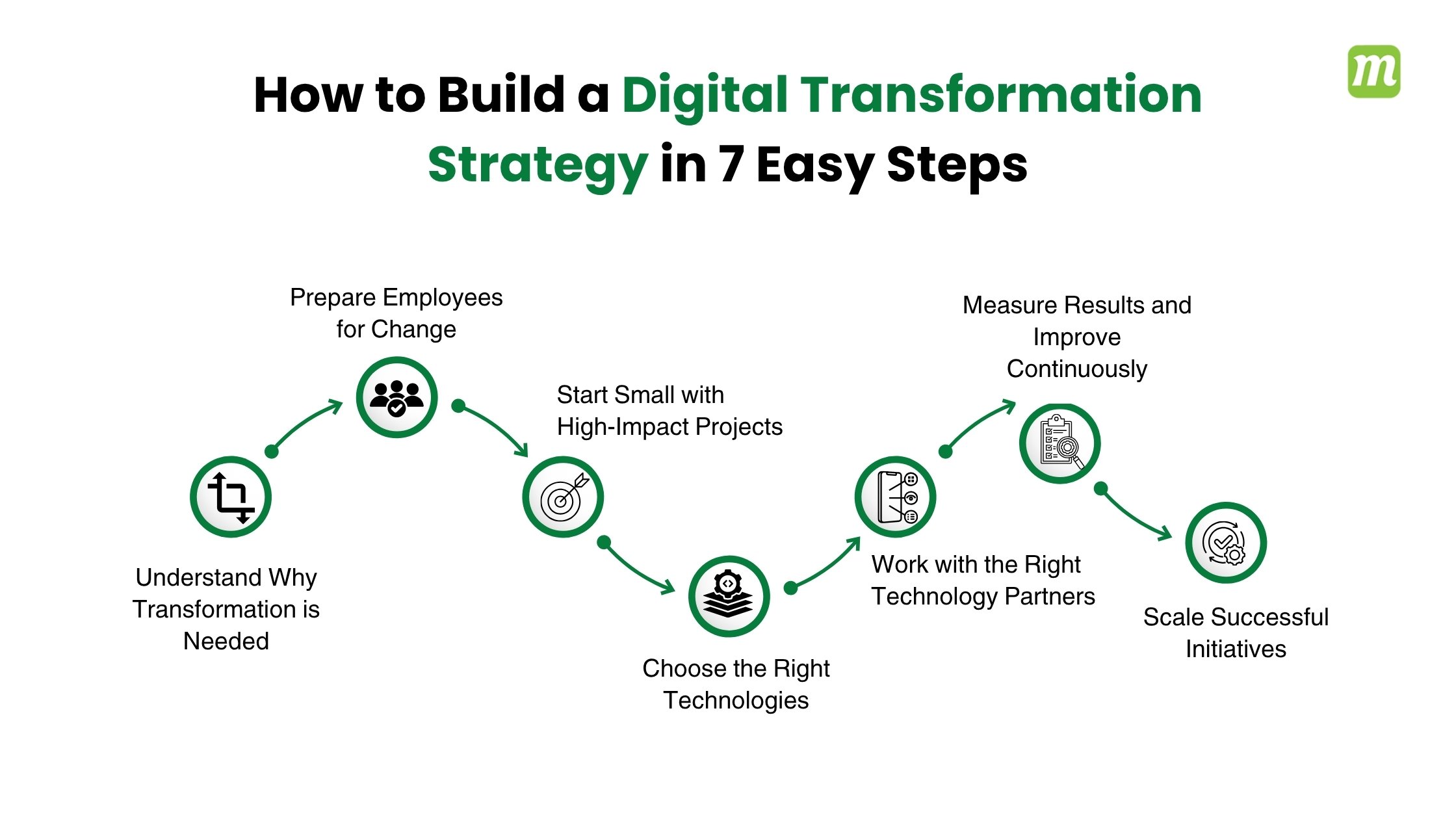
1. Understand Why Transformation is Needed
Before investing in new tools or software, you should clearly identify your business goals. Ask questions like:
- What problems are we trying to solve?
- How can technology improve our business?
- What results do we want in the next 5 to 10 years?
Your digital transformation strategies should always support your business goals, such as improving customer experience, increasing efficiency, reducing costs, or driving growth.
2. Prepare Employees for Change
Digital transformation often changes how employees work every day. Because of this, some people may resist new systems or processes. This is why strong leadership support is important to guide teams through this transition phase.
What else? Interested companies should involve different departments in the transformation process, including IT, sales, marketing, and operations. Bear in mind that encouraging teamwork, communication, and continuous learning helps create a culture that is open to innovation and change for everyone.
3. Start Small with High-Impact Projects
Since AI-driven business transformation is a long journey, you should begin with smaller projects that can deliver quick results. These “quick wins” will help build confidence and prove the value of your digital transformation strategy.
For example, your company may automate a manual process or improve customer support using AI tools. And the ideal first project should:
- Solve a real business problem
- Deliver exceptional results
- Show value within a few months
Once successful, the same business digital transformation strategy can be expanded across the entire organization.
4. Choose the Right Technologies
Technology plays a major role in digital transformation, but it should support business goals, not replace them. Simply adding new technology without improving processes can lead to wasted investments.
Some technologies commonly used in digital transformation include:
- Cloud computing
- Artificial Intelligence (AI)
- Automation tools
- Internet of Things (IoT)
- Mobile applications
- Data analytics
The leading digital transformation companies recommend creating a clear digital transformation implementation roadmap that explains how these technologies will support their current and future goals.
5. Work with the Right Technology Partners
Many companies rely on external technology providers or consultants to work on their digital transformation projects. And choosing the right technology partner is important because they help implement solutions strategically and guide long-term growth.
When selecting the best technology partner, businesses should consider:
- Can the solution scale as the business grows?
- Does it work with existing systems?
- Does the partner understand the industry and business needs?
- Do they have experience with similar projects?
The right tech partner can help avoid costly mistakes and speed up customer-centric transformation implementation.
6. Measure Results and Improve Continuously
You must define understandable KPIs (Key Performance Indicators) before starting a digital transformation project. These metrics help measure success and track the progress of your transformation initiatives.
Examples of KPIs include:
- Reduced operational costs
- Faster project delivery
- Higher customer satisfaction
- Increased productivity
Aside from that, it is also important to collect feedback from employees and stakeholders regularly. Do remember that custom experience and operational efficiency transformation is an ongoing process, so you should stay flexible and make improvements whenever needed.
7. Scale Successful Initiatives
Once early projects start delivering positive results, it is suggested to expand those solutions across other teams, departments, or locations. Be informed that successful digital transformation grows step by step.
For example:
- A cloud solution used in one department can be implemented across all departments
- AI tools used for customer service can later support sales and operations
All in all, every business has different goals and challenges, which is why a customized digital transformation strategy is essential. And if you want to have a reliable technology partner by your side that can create and implement a customized digital transformation strategy across your organization, InnovationM is the company to connect with.
Enterprise vs. Startup: How Digital Transformation Strategies Differ
| Areas | Enterprises | Startups |
| Biggest Challenge | Managing old systems, complex processes, and strict compliance rules | Growing quickly without building systems that become difficult to manage later |
| Starting Point | Already have existing software, workflows, and company culture that need improvement | Usually start with modern cloud-based tools, so the focus is on scaling efficiently |
| AI Adoption Challenges | Connecting AI with multiple existing systems while maintaining security and governance | Implementing AI too quickly before building reliable data systems |
| Change Management | A bit difficult because employees are used to long-established processes | Easier to adapt, but important to build the right work culture from the beginning |
| ROI Timeline | Usually takes longer, something around 18 to 36 months to achieve tangible business impact | Faster results are possible, often within 6 to 12 months with the right strategy |
| Main Risk | Not investing enough in employee adoption, governance, and data management | Prioritizing short-term speed over scalable architecture, which can create problems in the future |
| InnovationM’s Approach | Step-by-step enterprise modernization with strong governance and structured transformation planning | Building scalable cloud-native systems from day one with AI-ready data foundations |
Essential Capabilities Every Business Needs to Ensure Digital Transformation Success
A successful digital transformation project requires more than just adopting new tools and technologies. Companies need the right strategy, people, processes, and systems working together to ensure the success of their digital transformation initiatives. Here is a list of important capabilities that are required to succeed digital transformation strategies:
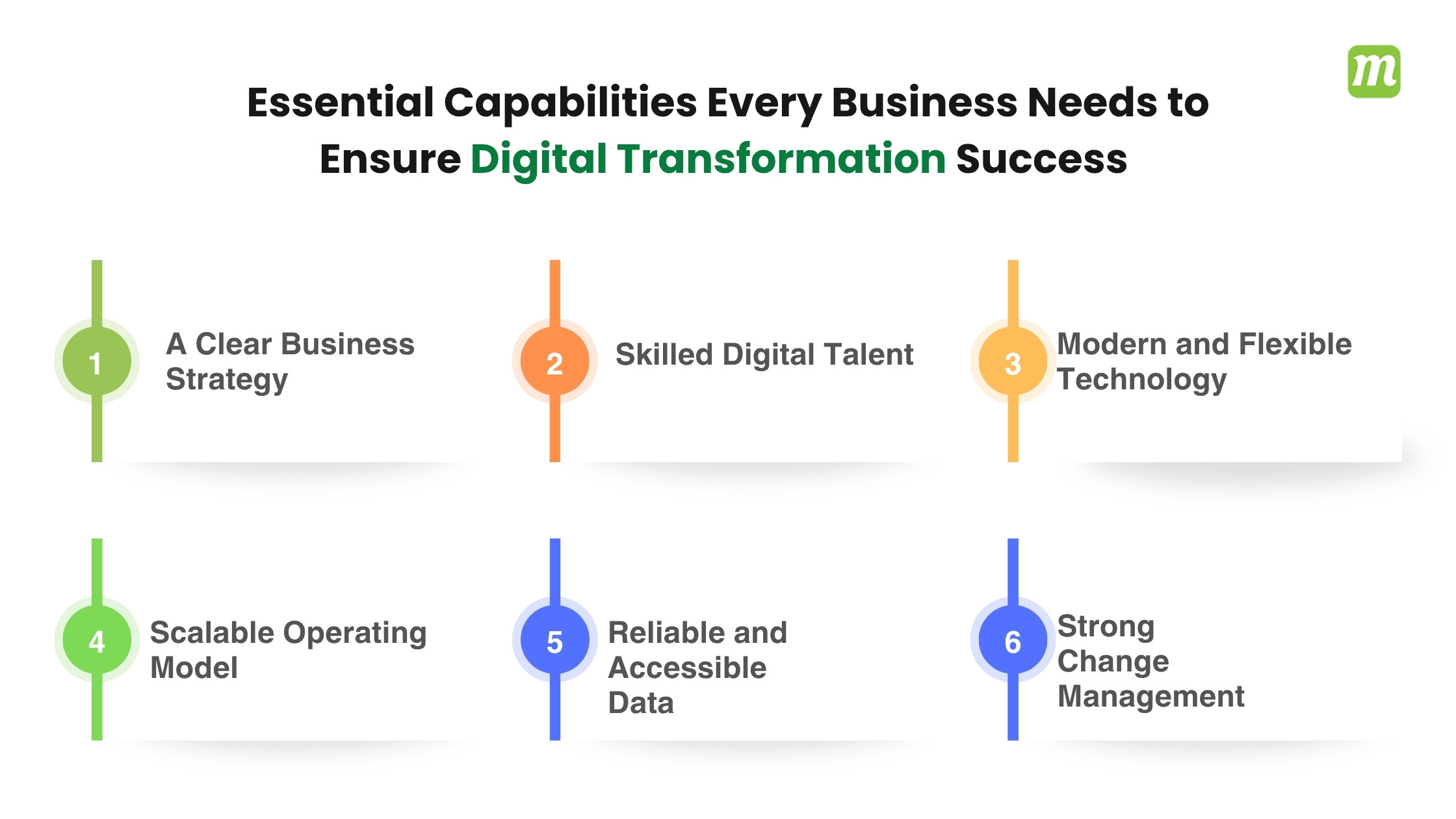
1. A Clear Business Strategy
Companies should focus on solving important business problems and creating meaningful value. Having a clear enterprise digital transformation roadmap helps teams understand goals, priorities, and the steps needed to perform to achieve them.
2. Skilled Digital Talent
Businesses need employees with excellent digital and technical skills, especially in areas like software development, cloud, AI, and data analytics. And hiring, training, and retaining skilled talent is extremely important to ensure the success of your enterprise modernization projects.
3. Modern and Flexible Technology
In-house teams of interested companies should have easy access to the tools, software, and systems to innovate quickly. And cloud platforms, APIs, and automation tools are a few assets that help businesses stay agile and efficient.
4. Scalable Operating Model
Different teams across the organization must work together effectively to achieve technology-enabled growth. Businesses need flexible processes and collaboration models that can grow as digital acceleration initiatives expand.
5. Reliable and Accessible Data
Good decisions depend on accurate and updated data generated across an organization. Therefore, companies need strong data management systems so teams can easily access and use information when needed.
6. Strong Change Management
It is advised to support the employees of an organization throughout the digital transformation journey. This is because training, communication, and regular feedback help improve adoption and minimize their resistance to change.
Keep in mind that digital transformation projects succeed only when all these capabilities work together to support business growth and innovation.
Take the Next Step Toward a Future-Ready Digital Business!
Businesses that follow a well-planned digital transformation implementation roadmap are better prepared for long-term growth, innovation, and market changes. A solid foundation built on clear business goals, latest technologies, skilled teams, and effective leadership helps organizations stay competitive in an ever-evolving digital world.
However, successful digital transformation is not just about implementing new technologies. It also depends on how well businesses prepare and support their employees throughout the transformation journey. Companies that invest in change management, employee training, and cross-functional collaboration often achieve better results and adapt more quickly to changing market demands.
Thus, you should treat digital transformation planning as a continuous process of improvement rather than a one-time initiative. Organizations that embrace this mindset can build the business agility, scalability, and resilience needed to succeed in the future.
In fact, recent research shows that companies that effectively manage the people’s side of digital transformation can achieve up to 7x better outcomes compared to those that focus only on technology adoption.
Ready to build a future-ready digital business with the right transformation strategy?
Speak to DX experts at InnovationM to design and implement scalable digital transformation solutions that improve operational efficiency, accelerate innovation, and drive long-term business growth.
Frequently Asked Questions
1. What is a digital transformation strategy?
A digital transformation strategy is a step-by-step plan that helps a business use modern technologies like AI, cloud computing, process automation, and data analytics to improve the way it works. The goal is to make operations faster, improve customer experience, and stay competitive in the market.
For your information, digital transformation is not just about adding new software or tools. A successful digital transformation strategy also involves improving business processes, training employees, and creating a culture that supports a digital-first organization.
2. What are the four pillars of digital transformation?
The four main pillars of digital transformation are:
- Modern Technology Infrastructure: It uses cutting-edge technologies like cloud platforms, APIs, and scalable software systems.
- Data-Driven Decision Making: It leverages data, automation and analytics, and AI to make smarter business decisions.
- Better Customer Experience: It refers to delivering smooth, personalized, and consistent experiences across websites, apps, and other channels through customer experience transformation.
- Organizational Culture Change: It is all about encouraging employees to adopt a digital maturity model, agile working method, and continuous learning.
All four pillars we discussed above are interconnected, and ignoring any one area can impact the overall success of your digital transformation initiatives.
3. How long does a digital transformation strategy take?
Implementing a digital transformation strategy for business growth is usually a long-term process, and it often takes around 18 to 36 months for full implementation.
- First Phase (3 – 6 months): Planning, identifying goals, setting governance, and achieving quick improvements.
- Second Phase (6 – 18 months): Implementing core systems, cloud migration, and testing AI or automation solutions.
- Third Phase (18 – 36 months): Expanding solutions across the organization and optimizing performance.
Startups often transform faster compared to enterprises because they usually have fewer old systems to replace. Also, the timeline mainly depends on the complexity of existing systems and how ready the organization is for change.
4. Why do most digital transformation initiatives fail?
Most digital transformation initiatives fail because businesses focus only on technology and ignore other important factors. Some common reasons include:
- Technology goals not matching business goals
- Lack of strong leadership support
- Employees resisting change
- Poor data quality or weak data management
- Not defining success metrics early enough
In most digital acceleration projects, the problem is not the technology but poor planning, communication, and execution.
5. What is the role of AI in a digital transformation strategy?
AI helps businesses work smarter, faster, and automate repetitive tasks, analyze large amounts of data, improve customer experiences, and support better decision-making.
For example, AI-driven business transformation can help companies:
- Predict customer behavior
- Personalize recommendations
- Improve operational efficiency
- Automate support and workflows
However, businesses need reliable data systems and proper governance to make AI accurate, secure, and trustworthy on a large scale.
6. How do startups approach digital transformation differently from enterprises?
Startups and enterprises usually have different digital transformation priorities.
- Startups often begin with contemporary cloud native apps, so they focus on scaling quickly, building strong data foundations, and adopting AI early.
- Enterprises already have older systems and established processes, so their main challenge is ensuring enterprise modernization and helping employees adapt to change.
For startups, the biggest risk is building systems too quickly without proper planning, which can create future technical problems as the business grows.
7. What KPIs should I track for digital transformation?
To validate the success of digital transformation strategies, businesses should track KPIs (Key Performance Indicators) in four main areas:
- Financial Metrics: ROI, reduced operational costs, revenue from digital channels
- Customer Metrics: Customer satisfaction, retention rate, adoption of digital platforms
- Operational Metrics: Automation levels, faster deployments, reduced time-to-market
- Workforce Metrics: Employee productivity, digital skill development, technology adoption rates
It is best to define these KPIs before starting the technology-enabled growth, so progress can be measured clearly and accurately.