
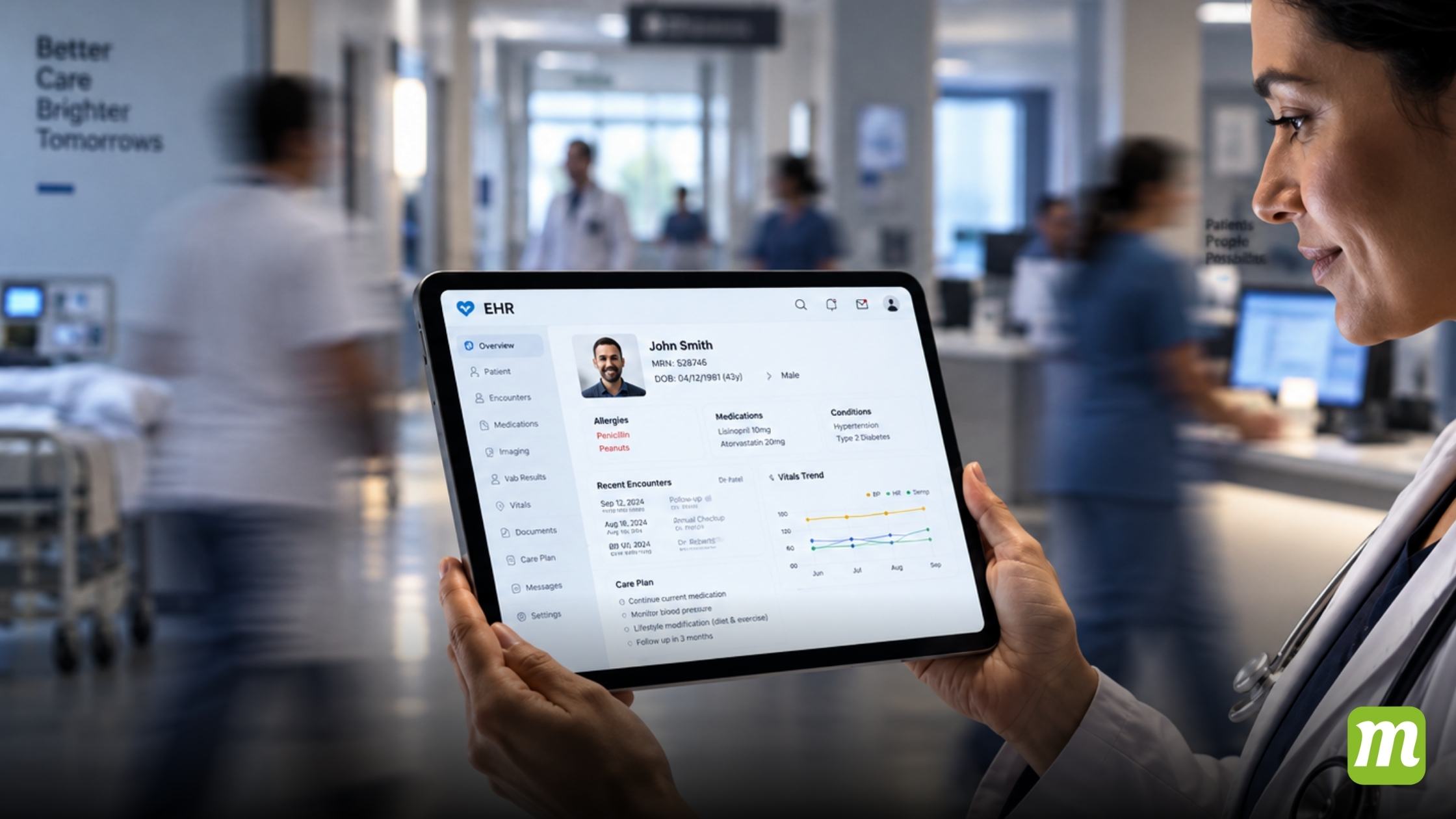
Healthcare generates a huge amount of patient data every day. The challenge is that this information often lives in different systems, EHRs, labs, pharmacies, billing platforms, patient apps, and medical devices, that don’t always communicate well with each other.
That’s where EHR integration comes in.
Instead of making healthcare professionals jump between systems or enter the same patient information multiple times, EHR integration connects these systems so data can move securely and automatically where it’s needed. This can mean faster access to patient information, fewer manual errors, smoother workflows, and better coordination between care teams.
The need for connected healthcare systems is growing as EHR adoption continues to rise. According to the CDC’s 2024 National Electronic Health Records Survey, 95.0% of U.S. office-based physicians had adopted an EHR system, with 83.6% using a certified EHR system.
But integrating an EHR isn’t as simple as connecting two software systems. Healthcare organizations need to think about interoperability standards, legacy systems, data security, HIPAA compliance, patient matching, and how the integration fits into everyday clinical workflows.
In this guide, we’ll break down what EHR integration is, how it works, the most common integration methods, its benefits and challenges, and the key steps and best practices for implementing it successfully.
What is EHR Integration?
EHR integration is the process of connecting Electronic Health Record systems with other software and databases so patient data can flow automatically.
In the U.S., this can include connecting an EHR with health information exchanges, clinical laboratories, pharmacies, medical billing systems, health insurance platforms, patient portals, telehealth platforms, and other healthcare applications.
Common Uses
- Connecting medical billing and revenue cycle management systems.
- Sharing lab results, medication information, and pharmacy orders.
- Connecting patient-facing mobile apps and portals to hospital or health system records.
- Integrating telehealth and remote patient monitoring platforms with EHRs.
- Connecting clinical systems with healthcare analytics and reporting platforms.
Organizations connecting multiple healthcare applications and data sources can also benefit from an Enterprise Data Integration approach that brings data together in a structured and scalable way.
How does EHR Integration Work?
EHR integration connects a central electronic health record system to external tools, such as laboratories, pharmacies, billing platforms, medical devices, and healthcare applications, so information can move between systems without requiring staff to manually re-enter it.
How the Process Works
- The Connector (APIs): Application Programming Interfaces (APIs) allow different software systems to communicate and exchange information.
- The Shared Language: Healthcare systems use standards such as HL7 and FHIR so connected systems can interpret and process clinical data consistently.
- The Exchange: Depending on the integration, information can be pushed automatically between systems or retrieved when an application requests it.
- The Security: Authentication, authorization, encryption, and protocols such as OAuth 2.0 help protect sensitive patient information during data exchange.
Why It Matters
- No Double Entry: Staff don’t have to copy and paste or manually re-enter lab reports and other patient information.
- Faster Access: Clinicians can access updated patient information within their workflows.
- Fewer Errors: Automated data transfers reduce the risk of errors caused by repetitive manual entry.
As healthcare organizations connect more applications and data sources, EHR integration can also become part of a broader digital transformation strategy, helping modernize workflows and improve how technology is used across the organization. Explore Digital Transformation Services to learn more about modernizing healthcare technology environments.
Why is EHR Integration Important?
EHR integration connects patient records with external healthcare systems so authorized information can be shared securely and efficiently.
The need for interoperability is clear. According to research from the U.S. National Center for Biotechnology Information, the percentage of U.S. hospitals that routinely engaged in all four domains of interoperable exchange, sending, receiving, finding, and integrating health information, increased from 28% in 2018 to 43% in 2023.
This progress is encouraging, but it also shows that consistent interoperability remains a challenge for many healthcare organizations.
Common EHR Integration Methods
The most common EHR integration methods include APIs, HL7 messaging, SFTP-based file transfers, and Robotic Process Automation (RPA).
Common Integration Methods
- APIs (Application Programming Interfaces): Modern healthcare applications commonly use RESTful APIs, particularly FHIR-based APIs and SMART on FHIR, for secure and structured access to health information.
- HL7 (Health Level Seven): HL7 v2 messaging remains widely used across U.S. healthcare organizations for exchanging information such as laboratory results, orders, and ADT (Admission, Discharge, and Transfer) messages.
- SFTP (Secure File Transfer Protocol): SFTP can be used for scheduled, batch-based data transfers when real-time connectivity isn’t available or isn’t necessary.
- RPA (Robotic Process Automation): RPA bots can automate repetitive data-entry or administrative tasks, particularly when working with legacy systems that don’t provide modern APIs.
Specialized Data Standards
- DICOM: DICOM is the standard used to store, manage, and exchange medical imaging such as X-rays, CT scans, and MRI images, particularly across radiology systems and PACS.
- X12 EDI: X12 standards are widely used in U.S. healthcare for administrative and financial transactions, including insurance claims, eligibility verification, and payment-related workflows.
What is the Most Common Way to Integrate an EHR System with Other Healthcare Applications?
APIs are one of the most common approaches for connecting modern EHR systems with healthcare applications and other digital platforms.
Why are APIs a Common Choice?
- Two-way data exchange: APIs allow systems to send and retrieve information programmatically.
- Flexibility: APIs work well with modern web, mobile, cloud, and healthcare applications.
- Standardization: FHIR-based APIs provide standardized ways to represent and exchange healthcare information across different systems.
For organizations building healthcare applications that need to communicate with EHR platforms, the integration layer is often closely tied to the application’s overall architecture. This is where App Development Services can support the development of connected healthcare applications.
Key Benefits of EHR Integration
EHR integration connects electronic patient records with other healthcare systems to improve care coordination, reduce manual work, and streamline day-to-day operations.
Better Patient Care and Safety
- Fewer medical errors: Integrated systems can make relevant medication, allergy, and clinical information available to providers during care.
- Faster emergency response: Clinicians can access important patient information more quickly when time is critical.
- More complete patient history: Providers can get a broader view of previous treatments, laboratory results, medications, and clinical notes.
Improved Workflow and Efficiency
- Seamless data sharing: Information can move securely between providers, laboratories, pharmacies, health plans, and other authorized systems.
- Less paperwork: Digital intake, scheduling, documentation, and automated workflows can reduce administrative tasks.
- Time savings: Healthcare staff spend less time searching for information across disconnected systems.
As healthcare becomes increasingly data-driven, EHR integration can also provide the data foundation needed for analytics and AI initiatives. Organizations exploring this area can learn more in The Complete Guide to the Cost of Implementing AI in Healthcare (2025–2030) and AI Trends in Healthcare 2026: Key Market Stats and Future Outlook.
Common EHR Integration Challenges & Solutions
EHR integration can involve technical, financial, operational, and regulatory challenges. Healthcare organizations need to address these challenges early to build reliable and secure connections.
Common Challenges and Solutions
Data Silos & Interoperability Gaps
- Challenge: Patient information may be fragmented across systems that use different technologies, data structures, and formats.
- Solution: Use established interoperability standards such as HL7 and FHIR, along with APIs and integration middleware, to support consistent data exchange.
Legacy System Limitations
- Challenge: Older healthcare systems may lack modern APIs or support only older integration technologies.
- Solution: Use interface engines, API wrappers, middleware, or custom adapters to connect legacy systems with newer applications.
Security & Compliance Risks
- Challenge: Integrating systems increases the number of points where protected health information (PHI) is transmitted or accessed, creating additional security considerations.
- Solution: Use encryption, role-based access control, multi-factor authentication (MFA), audit logging, and security controls aligned with applicable requirements and frameworks.
High Costs & Budget Constraints
- Challenge: Large-scale custom development and system replacements can require significant time and IT resources.
- Solution: Start with high-impact use cases and use a phased implementation roadmap to manage costs, reduce risk, and demonstrate value early.
How to Integrate an EHR System?
Integrating an EHR system involves connecting third-party software, medical devices, or applications to an existing EHR using appropriate data standards, APIs, interfaces, and security controls.
1. Planning and Discovery
- Assess your clinical and technical requirements, business goals, and target user workflows.
- Identify the systems and data feeds you need to connect, such as billing systems, laboratory systems, pharmacies, patient portals, or medical devices.
- Review applicable compliance requirements, including HIPAA, and determine which data exchange standards, such as HL7 or FHIR (Fast Healthcare Interoperability Resources), fit your use case.
2. Architecture and Design
- Choose the appropriate connection method, such as direct API access, SMART on FHIR, HL7 messaging, or bulk data exchange.
- Decide whether middleware is needed to handle data normalization, translation, routing, monitoring, and error tracking.
- Map internal data fields to standardized healthcare codes, such as LOINC for laboratory observations and RxNorm for medications.
3. Security and Compliance
- Implement secure authorization protocols such as OAuth 2.0 and use role-based access controls.
- Establish the appropriate legal and contractual agreements with vendors and business associates when required.
- Review the integration requirements of the EHR vendor and complete the necessary developer or partner registration processes.
4. Development and Testing
- Build and test data transformation pipelines in a secure vendor sandbox or test environment.
- Test edge cases, including invalid data, network interruptions, system downtime, duplicate records, and high-volume workloads.
- Implement reliable patient-matching rules to help prevent duplicate records or information being associated with the wrong patient.
5. Deployment and Support
- Conduct a phased rollout or begin with a pilot in a specific department or clinical unit.
- Provide role-based training for physicians, nurses, administrative staff, and other users.
- Establish ongoing monitoring, security reviews, performance testing, and support procedures after the integration goes live.
Three Keys to Successful EHR Integration
A successful EHR integration depends on more than technology. It also requires the right people, planning, and organizational support.
- The Right Attitude: Treat integration as an opportunity to improve patient care and workflows rather than simply another IT project.
- Qualified IT Resources: Work with experienced technical teams that understand healthcare integration, data migration, interoperability, and cybersecurity.
- Staff Buy-In: Involve physicians, nurses, and administrative staff early so the integration supports real-world workflows and addresses their concerns.
Organizations undertaking broader healthcare modernization initiatives can also explore Data Engineering Services for Scalable, AI-Ready Enterprises to build the data infrastructure needed for connected and analytics-ready environments.
EHR Integration Best Practices
EHR integration best practices focus on interoperability, security, data quality, and the needs of healthcare professionals who use these systems every day.
Use Standard Interoperability Protocols
- Adopt recognized frameworks: Use established healthcare standards such as HL7 for messaging and FHIR for modern API-based data exchange.
- Map data accurately: Standardize clinical data early, including laboratory results, medications, diagnoses, and other important healthcare information.
Prioritize Security and Compliance
- Follow applicable regulations: Protect PHI and implement appropriate administrative, technical, and physical safeguards to support HIPAA compliance.
- Encrypt data: Protect sensitive information both at rest and in transit.
Design for Clinical Workflows
- Engage end users early: Involve physicians, nurses, and administrative teams during planning and testing so the technology supports their day-to-day work.
- Implement robust error handling: Prepare for network failures, invalid data, system downtime, and other integration issues with clear recovery procedures.
Choose a Phased Rollout Strategy
- Test thoroughly: Conduct comprehensive testing in sandbox and production environments before expanding the integration.
- Roll out gradually: A phased rollout can make it easier to identify problems, train staff, and make adjustments before expanding across the organization.
EHR Integration and Data Security
EHR integration connects sensitive patient information across healthcare systems, so security needs to be considered at every stage of the integration lifecycle.
Core Integration Standards
- FHIR: Fast Healthcare Interoperability Resources provides a modern framework for exchanging healthcare information through standardized resources and APIs.
- HL7: HL7 messaging standards remain widely used for exchanging clinical information across healthcare systems.
- APIs: APIs enable applications to securely exchange information with EHR platforms.
- OAuth 2.0: OAuth 2.0 can be used to manage authorization and secure API access.
Data Security Practices
- Encryption: Protect data at rest and in transit using appropriate encryption technologies.
- Access Control: Role-Based Access Control (RBAC) limits access to patient information based on a user’s role and responsibilities.
- MFA: Multi-factor authentication adds additional verification requirements when users access sensitive systems.
- Audit Logs: Audit logging records access and changes to patient information, helping organizations monitor activity and investigate potential security issues.
Compliance and Rules
- HIPAA: The Health Insurance Portability and Accountability Act establishes requirements for protecting certain health information in the United States.
- BAA: A Business Associate Agreement (BAA) may be required when a healthcare organization shares PHI with a business associate.
- Certifications: Frameworks and certifications such as SOC 2, HITRUST, and ISO 27001 can provide additional assurance around an organization’s security practices.
Frequently Asked Questions About EHR Integration
1. What is EHR Integration?
Electronic Health Record (EHR) integration is the process of securely connecting an EHR system with outside applications, such as billing software, laboratories, pharmacies, patient portals, and healthcare apps, so relevant patient information can be exchanged without relying entirely on manual data entry.
2. How much does EHR Integration Cost?
The cost of EHR integration varies significantly depending on the systems involved, integration method, data volume, security requirements, and project complexity. A simple integration may cost tens of thousands of dollars, while complex enterprise integrations involving multiple systems, custom development, data transformation, and extensive testing can cost hundreds of thousands of dollars or more.
3. How Long does EHR Integration Take?
An EHR integration can take anywhere from several weeks to many months. The timeline depends on factors such as the number of systems being connected, EHR vendor requirements, integration complexity, data-mapping requirements, testing, and compliance considerations.
4. What is FHIR in EHR Integration?
FHIR (Fast Healthcare Interoperability Resources), pronounced “fire,” is a healthcare interoperability standard developed by HL7 International. It provides a modern, web-friendly way for systems to represent and exchange healthcare information.
5. Is EHR Integration HIPAA Compliant?
EHR integration itself isn’t automatically HIPAA compliant. Compliance depends on how patient information is collected, transmitted, stored, accessed, and protected throughout the integration. Healthcare organizations should implement appropriate safeguards, access controls, encryption, audit mechanisms, vendor agreements, and other measures required for their specific use case.
On a Concluding Note!
EHR integration is ultimately about making healthcare systems work better together. When patient information can move securely between EHRs, laboratories, pharmacies, billing systems, apps, and other healthcare technologies, providers spend less time searching for information and more time using it to support patient care.
The right approach depends on the systems you’re connecting and what you want the integration to achieve. APIs and FHIR can support modern, real-time connections, while HL7, SFTP, RPA, and other approaches still have an important role when working with existing or legacy systems.
Of course, successful integration takes more than choosing the right technology. Security, compliance, accurate data mapping, testing, user workflows, and ongoing monitoring all matter. It can also become an important part of a broader digital transformation strategy as healthcare organizations modernize their technology environments.
When the right systems, standards, security practices, and people come together, EHR integration can help create a healthcare environment where information is connected, accessible, secure, and useful when it’s needed.
For healthcare organizations building connected patient-facing applications, App Development Services in India can also support the development of healthcare applications designed to work with modern data and integration architectures.


