

Every day, millions of business owners think of building a market-winning product for their company. But little do they know that the journey to developing a revenue-generating product is not that easy. You need to take care of user needs, optimize resource management, and ensure quality assurance to pave the path for successful software product development. Apart from that, to navigate the development process seamlessly, it is essential to have an in-depth understanding of the complete Software Development Life Cycle (SDLC).
It’s because the Software Product Development Life Cycle is a well-structured process that describes all the stages and activities involved in creating high-quality software. The effectiveness of this software product development strategy in real-life projects is the main reason the global enterprise software market size is expected to rise from USD 322.8 billion in 2026 to USD 750.0 billion in 2033.
In this guide, we will take a deeper look at what software product development is, why it matters, the latest trends shaping the industry, and key business benefits of software development. In addition to all this, we will also throw light on the complete software product development lifecycle, widely adopted methodologies, and how choosing the right software development partner can help you build innovative, scalable, and future-ready digital products. Let’s first start with:
What is Software Product Development and Why Does It Matter?
Software Product Development is a well-thought-out process of planning, designing, building, testing, and launching software that requires software engineering expertise to solve specific business challenges or fulfill particular user needs. It can involve creating a new product, improving an existing one, or adding new features to the current product. This process matters a lot for businesses out there because it helps them deliver reliable, scalable, and user-focused software solutions that drive innovation and growth.
Key Benefits of Software Product Development for Modern Businesses
A few business benefits of custom software product development are:
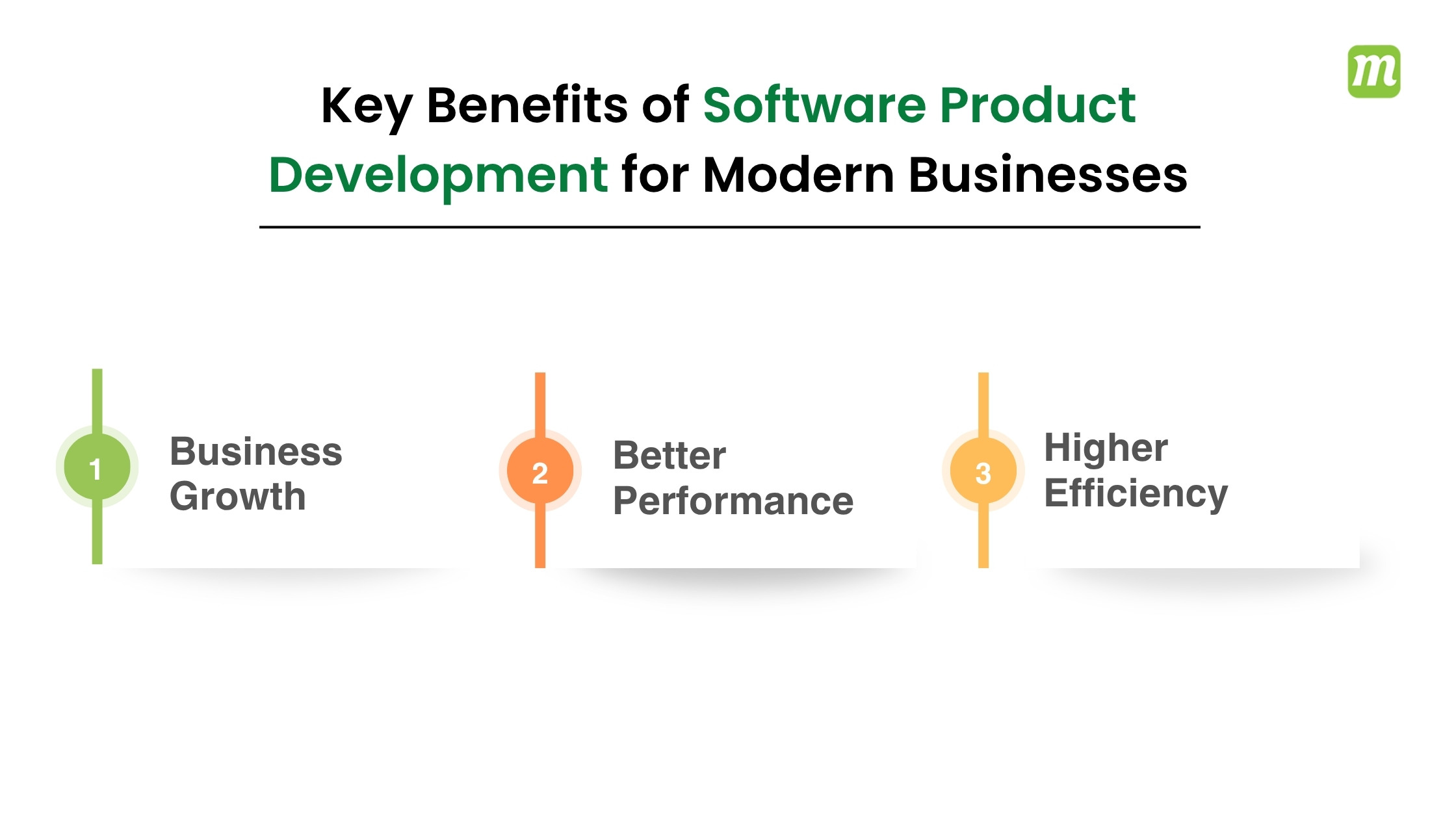
1. Business Growth
Following a well-designed software product development process enables businesses to build innovative products, enter new markets, attract more customers, and create additional revenue streams for business growth.
2. Better Performance
Availing top software product development services helps improve existing software, systems, and features, which helps companies deliver better user experiences without disrupting their current operations.
3. Higher Efficiency
With digital product development, you can create a high-performance work environment by streamlining processes, improving productivity, and ensuring your software operates as reliably as your business needs evolve.
Step-by-Step Software Product Development Process and Lifecycle Explained
Here is a step-by-step software product development process that helps businesses build high-quality, scalable, and reliable software solutions in an efficient manner:
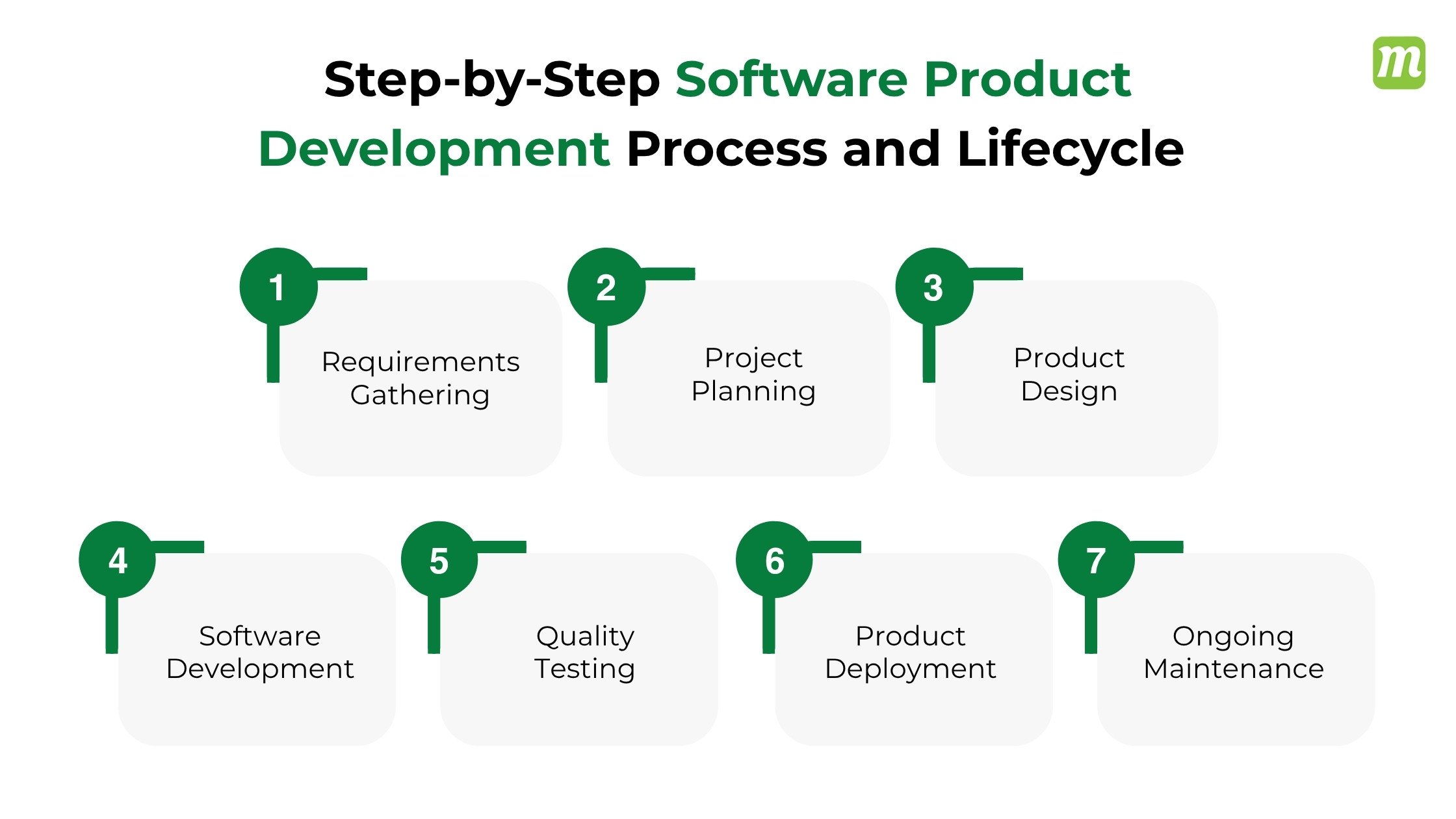
1. Requirements Gathering
The first step in the entire software product development lifecycle is understanding business goals, user expectations, and stakeholder requirements. Ensuring clear and complete requirements from day one helps create a strong foundation, reduce misunderstandings, and help teams build the right software solution.
2. Project Planning
Once requirements are finalized, our dedicated software development team defines the project scope, timelines, budget, resources, and milestones. Just to let you know, effective planning helps keep development organized, risks minimized, and ensures your software development project stays on track.
3. Product Design
Next, the designers at our custom software product development company create the software architecture, database structure, and user interface. The best part of a well-planned design is that it improves usability, performance, and scalability while providing developers with a clear roadmap for implementation.
4. Software Development
Then comes one of the most important software product development stages, where our developers write and integrate code based on the approved design and requirements. Be informed that continuous collaboration and regular reviews ensure your software functions correctly and aligns with your business objectives throughout development.
5. Quality Testing
The newly developed software then goes through rigorous software quality assurance and testing to identify bugs, security issues, and performance problems. This step in the product development process ensures your application remains reliable, secure, and delivers a smooth user experience before release.
6. Product Deployment
After successful testing, the team at our software product development company in India deploys your software to the production environment. Keep in mind that proper installation, configuration, and monitoring ensure a smooth product release with minimal disruption to users.
7. Ongoing Maintenance
Post-launch, we continuously monitor, update, and improve your enterprise applications. This is because regular bug fixes, security patches, performance enhancements, and new features help your software product remain reliable, responsive, and aligned with your changing business needs.
Proven Software Product Development Strategy That Enhances Project Success
Below is a list of software product development strategy that plays a key role in improving the scope of your project success:
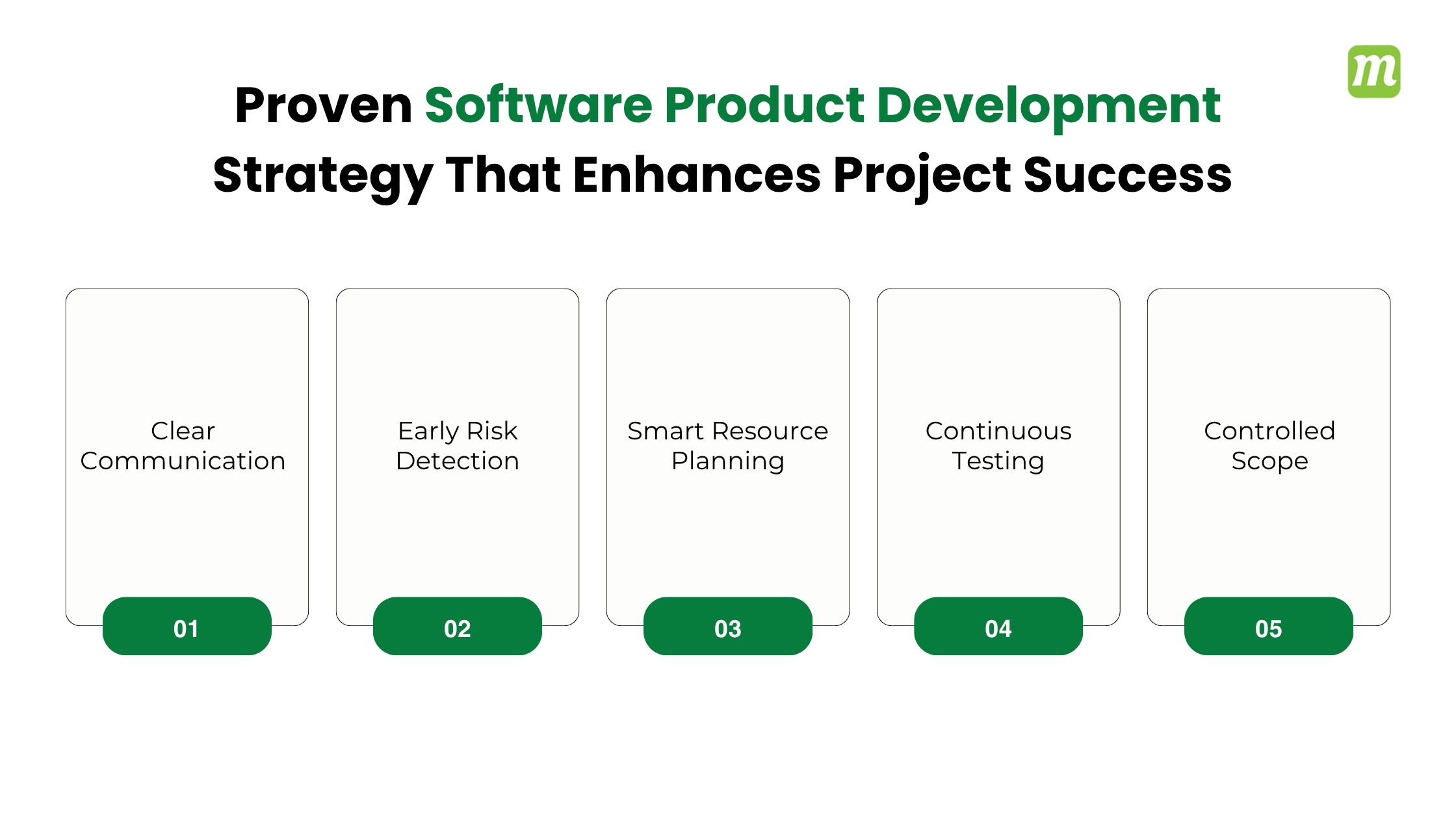
1. Clear Communication
The first and foremost thing you need to do is define project milestones, responsibilities, and deliverables from the beginning. By doing this, you can keep developers, designers, testers, and stakeholders aligned, which enables faster collaboration and informed decision-making throughout the project.
2. Early Risk Detection
The next software product development strategy focuses on identifying and resolving potential issues during each development stage instead of waiting until the final release. This is because early problem-solving reduces delays, costs, and unexpected project challenges.
3. Smart Resource Planning
Besides early risk detection, you can also allocate time, budget, and development resources effectively to increase overall productivity. For the uninitiated, proper planning helps development teams complete tasks efficiently while improving project performance and return on investment.
4. Continuous Testing
Coming to the next software product development strategy, it is recommended to test the software throughout its development lifecycle to identify bugs and performance issues in the initial stages. This ensures the development of a trusted, secure, and high-quality product before deployment.
5. Controlled Scope
Last but not least, clearly define your project requirements and boundaries to prevent unnecessary changes down the line. This is because effective scope management keeps the project on schedule, within budget, and focused on achieving its original objectives.
Popular Software Product Development Frameworks and Methodologies
Take a brief look at the software product development methodology implemented by a top software product development company in India:
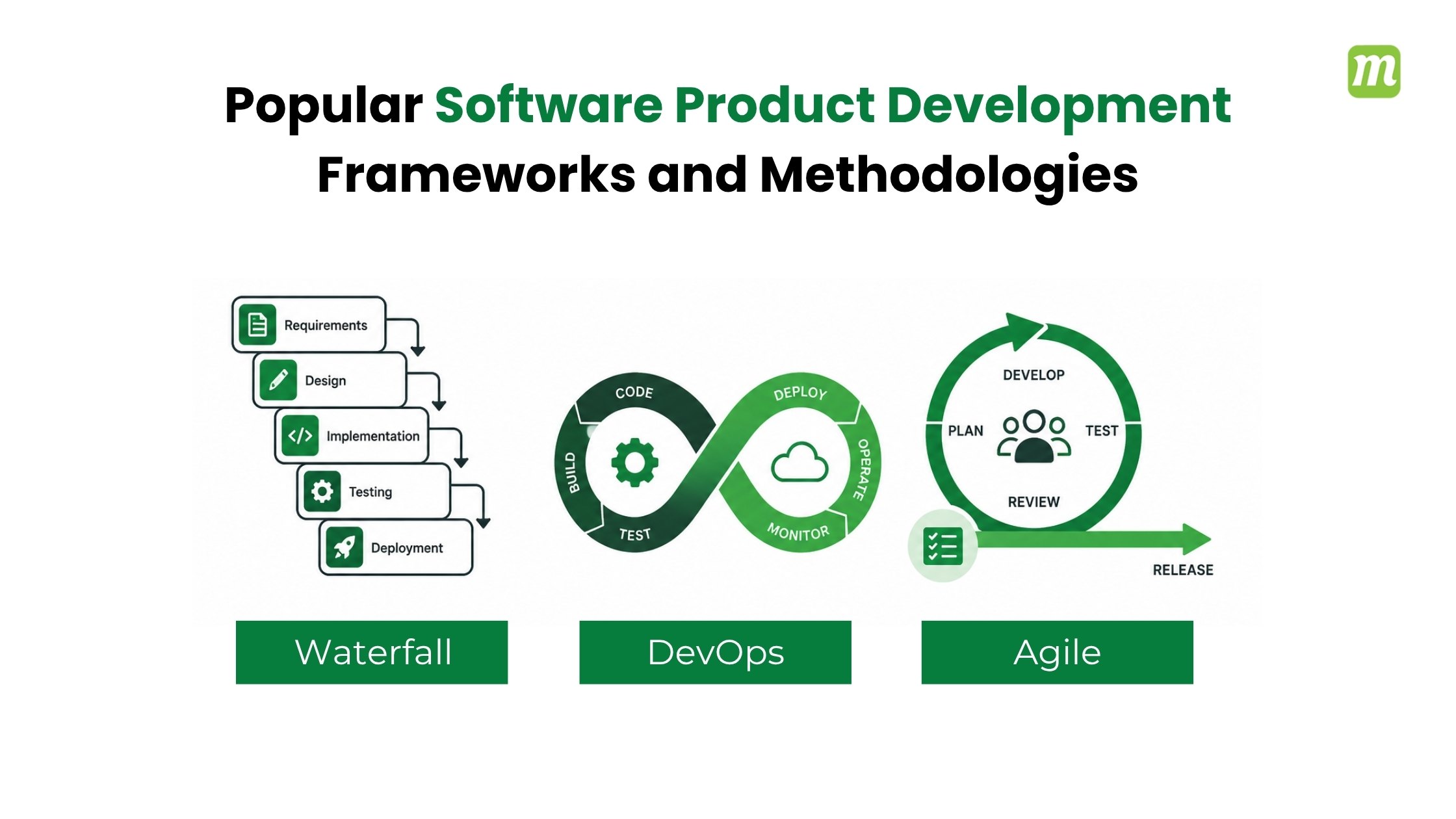
1. Agile
Agile methodology uses short development cycles, continuous testing, and regular customer feedback to deliver software faster than other methods. It enables teams to adapt quickly to changing business needs and improve their product quality.
2. DevOps
DevOps unifies development and operations to automate workflows, speed up releases, and improve collaboration. It helps businesses deliver go-to software with faster updates and continuous improvements.
3. Waterfall
Waterfall is the oldest software product development methodology that follows a structured, sequential development process where each stage is completed before the next begins. It is highly suitable for projects with well-defined requirements and detailed documentation.
Latest Software Product Development Trends to Watch in 2026
These are the famous and most impactful software product development trends to explore and implement in 2026:
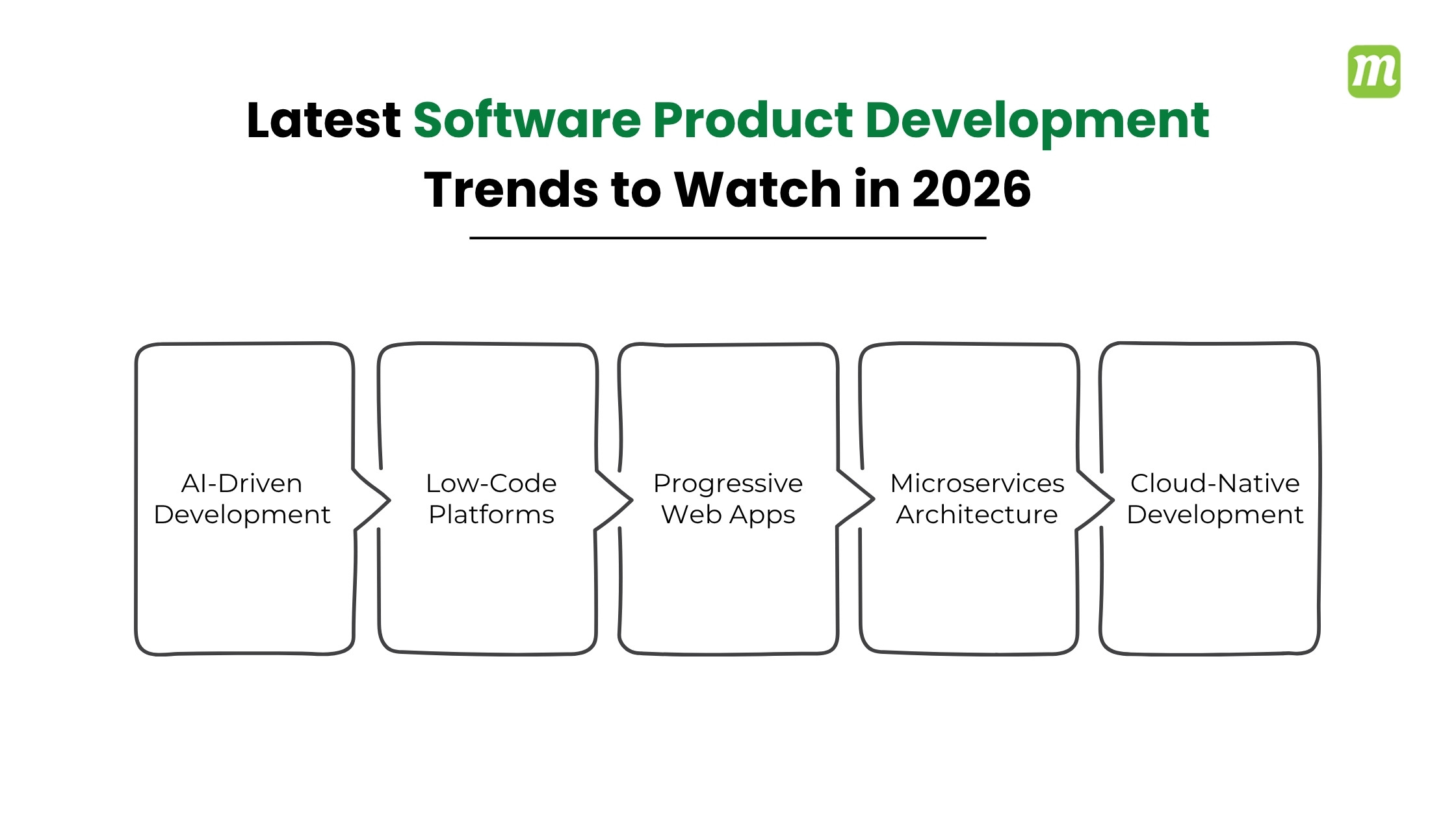
1. AI-Driven Development
AI is transforming software product development by enabling AI-powered business solutions that automate coding, testing, project planning, and bug detection. In fact, as per Gartner, 90% of enterprise software engineers will start leveraging AI code assistants by 2028, which is significantly more than almost 14% in 2024. This is why these software product development trends 2026 have emerged as essential productivity tools in recent years.
2. Low-Code Platforms
The great news about low-code and no-code platforms is that they enable faster application development using visual interfaces and pre-built components. They reduce development time to a great extent while allowing developers to focus on complex, more important software solutions.
3. Progressive Web Apps
When it comes to the subsequent software product development trends, one thing you must know is that progressive web apps (PWAs) deliver faster, app-like experiences without requiring downloads. They improve accessibility, reduce development costs, and provide a consistent user experience across a wide range of devices.
4. Microservices Architecture
Microservices divide enterprise applications into independent services that are easier to build, deploy, and scale. This software product development approach improves flexibility, system reliability, and allows teams to update features without affecting the entire application.
5. Cloud-Native Development
These software product development trends support remote collaboration, flexible infrastructure, and continuous software delivery. They assist businesses in responding quickly to changing customer demands while improving operational efficiency and application performance.
Why Do Businesses Choose Software Product Development Services Offered by InnovationM?
Businesses choose software product development services offered by InnovationM because we combine our technical expertise with a strong focus on delivering tangible business value. With experience in designing and developing 50+ types of software solutions, our in-house experts build secure, reliable, and cost-effective products using proven Agile and DevOps practices. Our ISO 9001:2015-certified quality management system ensures reliable software, while ISO 27001:2022 certification reflects our commitment to robust security.
By working closely with every client, our software product development company creates innovative software solutions that speed up time-to-market, boost operational efficiency, and deliver sustainable business growth through a collaborative, quality-first approach.
Ready to Build a Successful Software Product?
Building a successful software product requires the right strategy, development process, and technology expertise. By following a structured software product development lifecycle, businesses can minimize risks, expedite delivery, and create scalable solutions that meet evolving customer needs.
So, whether you are planning to develop a new product, modernize an existing application, or build scalable mobile solutions, partnering with the right development company can yield fruitful results. InnovationM helps organizations turn their ideas into high-revenue-generating software products while keeping their business goals in mind.
Have a software product idea?
Contact our experts today and let’s build a solution that drives long-term business success.
Frequently Asked Questions
1. What is software product development?
Software product development refers to a process of designing, developing, testing, releasing, and maintaining a software solution that is focused on the fulfillment of specific user or business needs. It combines product strategy, UI UX design, software engineering, quality assurance, and continuous improvements to deliver growth-driven cloud-native applications.
2. How much does it cost to develop a software product?
The cost to develop a software product depends on its complexity, features, technology stack, development team, and project timeline. Just for your information, simple MVP development requires a smaller investment, while enterprise-grade software products demand more resources. Therefore, InnovationM provides customized cost estimates based on your business goals, technical requirements, and scalability needs.
3. How long does it take to build a custom software product?
Custom software product development typically takes anywhere from a few months to over a year, depending on the project’s scope, complexity, and feature requirements. So, it is advised to start with a minimum viable product (MVP) as it helps accelerate time-to-market, gather user feedback early, and support continuous product improvements.
4. What features should be included in the first version of a software product?
Only core features that solve the primary user problem and help validate your product idea should be included in the first version of a software product. For example, MVP development with essential functionality, intuitive user experience, scalability, and feedback mechanisms enables faster market entry while minimizing development costs and business risks.
5. How can businesses ensure their software product is secure?
Businesses can ensure their software product is secure by implementing secure coding practices, regular testing, data encryption, access controls, and continuous security monitoring throughout the software product development life cycle. Following a security-first approach, conducting vulnerability assessments, and applying timely updates help protect enterprise applications from evolving cyber threats and compliance risks.
6. What factors should I consider before selecting a software product development partner?
Certain factors like proven industry experience, technical expertise, transparent communication, and a strong portfolio of successful projects you must consider before choosing a software product development partner for your project. Aside from this, you also need to evaluate their software product development methodology, post-launch support, and ability to understand your business objectives before making a long-term partnership decision.
7. What industries can benefit from custom software product development?
Multiple industries can benefit from custom software product development, including healthcare, fintech, logistics, manufacturing, education, retail, real estate, and travel, by solving their unique operational challenges. For the unversed, customized software improves efficiency, supports business growth, and adapts to industry-specific workflows more effectively than off-the-shelf solutions.
8. Should I hire an in-house team or outsource software product development?
Making the right decision between hiring an in-house team or outsourcing software product development depends on your budget, project complexity, and long-term business goals. For instance, outsourcing software product development offers faster access to experienced specialists, lower operational costs, and greater flexibility, while an in-house team provides direct control, dedicated resources, and closer collaboration for ongoing initiatives.
9. Which technologies are best for developing a SaaS product?
The best technologies for SaaS product development depend on your product requirements, scalability goals, and expected user base. Modern SaaS applications commonly use React or Angular, Node.js or .NET, cloud platforms like AWS or Azure, containerization, APIs, and scalable databases for reliable performance and future growth.
10. What is InnovationM’s approach to software product development?
InnovationM’s approach to software product development includes following a collaborative method that combines discovery, agile product development, user-centric design, quality assurance, and continuous delivery. Our team works closely with each client to validate their ideas, build scalable products, and provide ongoing support that aligns with their dynamic business and user needs.