
Building a successful software development team is one of the most important decisions an organization can make when investing in a digital product. Whether you’re launching a startup, modernizing enterprise software, or scaling an existing platform, the people behind the product determine how quickly they turn ideas into reliable, high-quality solutions. A well-structured development team improves collaboration, accelerates delivery, and minimizes project risks.
The growing demand for digital products continues to reshape how businesses approach hiring and team building. According to Statista, global enterprise software spending is expected to reach nearly USD 1.24 trillion by 2026, highlighting the increasing investment in software-driven innovation. As organizations adopt cloud technologies, artificial intelligence, and modern application architectures, understanding how to build a software development team has become a strategic business priority rather than simply an HR function.
Many companies assume that building an engineering team is only about hiring experienced developers. However, long-term success depends on much more than technical expertise. A clear software development team structure, well-defined roles, effective communication, and strong collaboration between business stakeholders and software engineers are equally important for delivering successful digital products. Organizations that invest in these fundamentals create high-performing engineering teams that can adapt to changing business requirements and support long-term growth.
What Does an Effective Development Team Do?
A software development team is a cross-functional group of professionals responsible for planning, designing, developing, testing, deploying, and maintaining software applications. Rather than working in isolation, each team member contributes specialized expertise throughout the software development lifecycle, ensuring the final product aligns with business objectives, quality standards, and user expectations.
High-performing software engineering teams combine technical expertise with collaboration, accountability, and continuous improvement. A typical development team includes software engineers, Product Owners, Project Managers, Business Analysts, UI/UX Designers, Frontend and Backend Developers, QA Engineers, and DevOps specialists who work together to deliver reliable digital solutions.
Regardless of project size, a well-defined team structure helps every professional understand their responsibilities and collaborate effectively. When roles are clearly assigned and communication remains transparent, organizations can improve productivity, reduce development bottlenecks, and build scalable software that supports long-term business growth.
Key Factors That Build a Strong Development Team
Building a high-performing team requires more than technical expertise. Organizations that know how to build a software development team focus on creating an environment where people, processes, and technology work together to deliver reliable, scalable software solutions.
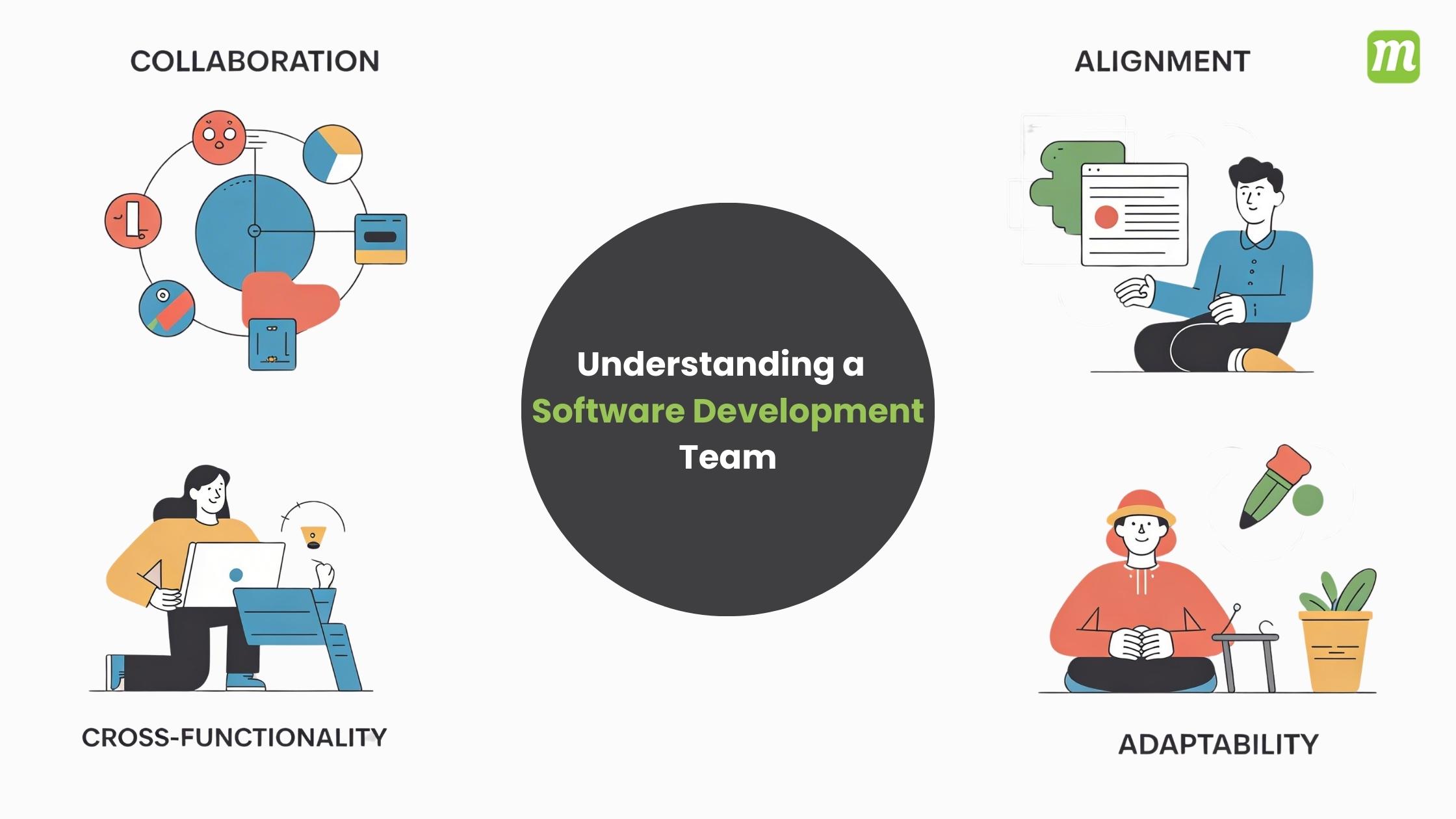
Collaboration
Effective collaboration keeps every development team aligned throughout the project. Agile development frameworks such as Scrum and Kanban improve visibility, simplify planning, and encourage continuous feedback. Regular sprint planning, daily stand-ups, and retrospectives help software engineering teams identify challenges early, improve communication, and accelerate delivery.
Alignment with Business Goals
Every dedicated development team should clearly understand the product vision, customer expectations, and business objectives before development begins. When engineering decisions align with business priorities, teams focus on delivering features that create measurable value instead of simply completing development tasks.
Cross-Functional Expertise
An effective software team combines professionals with complementary skills. Product Owners define priorities, Project Managers coordinate execution, software engineers develop the application, UI/UX Designers create intuitive experiences, QA Engineers maintain quality, and DevOps Engineers streamline deployment. This cross-functional team approach strengthens the overall team structure, improves collaboration, and reduces development bottlenecks.
Adaptability and Continuous Learning
Technology continues to evolve rapidly, making adaptability essential for every engineering team. Organizations that encourage continuous learning, knowledge sharing, and process improvement enable their software engineers to respond quickly to changing requirements while maintaining product quality and long-term scalability.
Understanding Software Development Team Structure
Selecting the right team is a critical step in building a successful digital product. The way an engineering team is organized influences communication, productivity, scalability, and delivery speed. A well-planned software team structure ensures every professional understands their responsibilities while promoting seamless collaboration across the project.
When considering how to structure a team, organizations should evaluate factors such as project complexity, budget, timeline, technology stack, and long-term business objectives. Startups often benefit from lean and flexible development teams, while enterprise projects usually require specialized roles and experienced software engineering teams to manage larger, more complex initiatives.
Most modern organizations adopt a cross-functional team model, where professionals from different disciplines work together toward shared business goals. This collaborative approach combines technical expertise, clear ownership, and efficient communication, enabling organizations to deliver high-quality software while adapting to changing project requirements.
| Role | Primary Responsibility |
| Product Owner | Defines product vision and prioritizes features |
| Project Manager | Plans, coordinates, and delivers the project |
| Business Analyst | Converts business needs into technical requirements |
| UI/UX Designer | Designs intuitive and user-friendly interfaces |
| Frontend Developer | Develops the application’s user interface |
| Backend Developer | Builds APIs, databases, and business logic |
| QA Engineer | Tests software quality and functionality |
| DevOps Engineer | Automates deployment and manages infrastructure |
This structure creates accountability, improves collaboration, and helps organizations deliver high-quality software efficiently.
Top 3 Types of Software Development Team Structure
Although every organization has unique requirements, there is no one-size-fits-all approach to organizing a development team. The right structure depends on factors such as project complexity, business goals, budget, and the level of technical expertise required. Most organizations adopt one of the following three models.
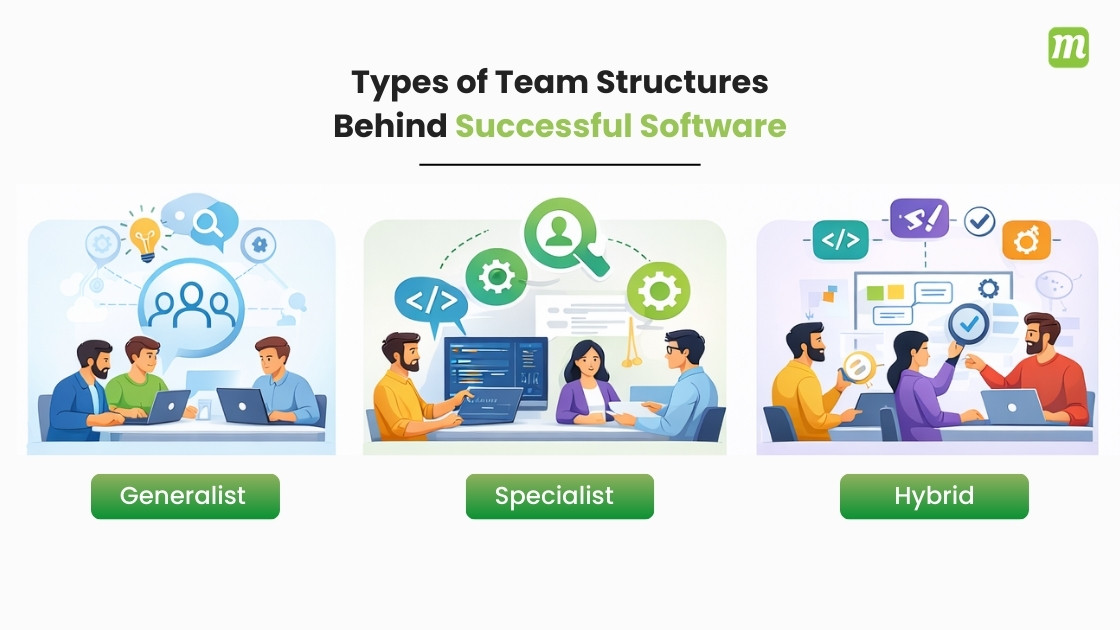
Generalist Team Structure
A generalist team structure consists of professionals with broad technical knowledge who can contribute across multiple areas of development. Rather than specializing in a single discipline, team members handle diverse responsibilities based on project needs, making this model highly adaptable.
This software team structure is well suited for startups, MVP development, and small businesses where flexibility and rapid execution are more valuable than deep specialization. Since individuals can perform multiple roles, the team can respond quickly to changing priorities and evolving customer requirements.
Best suited for:
- Startups
- MVP development
- Small software projects
- Budget-conscious organizations
Challenge: Generalists may lack the specialized expertise required for highly complex enterprise applications or regulated industries.
Specialist Team Structure
A specialist development team structure brings together professionals with deep expertise in specific domains such as frontend development, backend engineering, cloud infrastructure, cybersecurity, quality assurance, and DevOps.
This approach is commonly used by enterprises developing large-scale or mission-critical applications, where specialized knowledge improves code quality, system reliability, and overall performance.
Best suited for:
- Enterprise software
- Healthcare applications
- FinTech platforms
- Large-scale SaaS products
- Compliance-driven industries
Challenge: Specialized teams require strong coordination and communication to avoid knowledge silos and delivery delays.
Hybrid Team Structure
The hybrid team structure combines the flexibility of generalists with the deep expertise of specialists. It enables organizations to balance speed, scalability, and technical excellence while adapting to changing project requirements.
In this model, specialists lead critical technical functions, while versatile software engineers support multiple areas of development. This cross-functional team approach encourages collaboration, improves resource utilization, and helps organizations scale engineering capabilities without compromising quality.
For businesses evaluating the right team structure, the hybrid model often provides the ideal balance between agility, innovation, and long-term growth.
Best suited for:
- Growing startups
- Mid-sized businesses
- Digital transformation projects
- Enterprise modernization
- Long-term product development
Challenge: Success depends on clearly defined responsibilities, effective leadership, and transparent communication across the entire development team.
Which Team Structure Should You Choose?
There is no single team structure that works for every project. The right approach depends on your business objectives, product complexity, available budget, technical requirements, and long-term growth plans.
- Choose a generalist team when flexibility, faster execution, and cost efficiency are your priorities.
- Choose a specialist team for technically complex applications or projects with strict security and compliance requirements.
- Choose a hybrid model if you need both scalability and specialized expertise to support long-term product development.
How to Build a Software Development Team in 2026 (A Step-by-Step Guide)
Knowing how to build a development team involves much more than hiring experienced developers. High-performing engineering organizations combine the right people, a clear team structure, effective communication, and a culture of collaboration and continuous improvement. Whether you’re building an MVP or expanding an enterprise platform, following a structured approach improves productivity, minimizes project risks, and accelerates delivery.
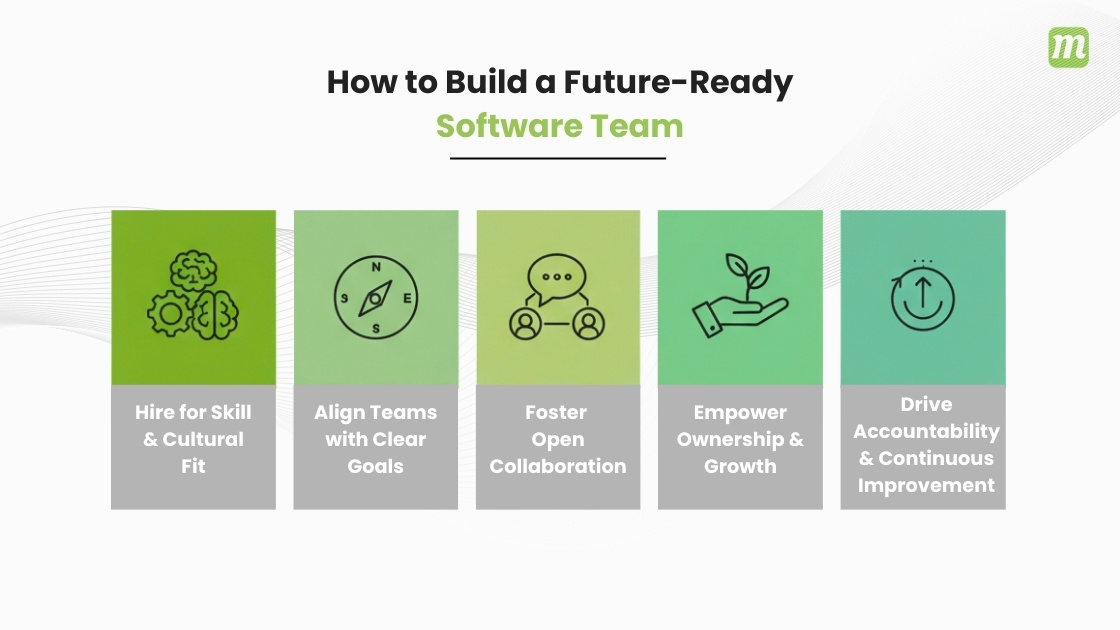
Hire the Right People for the Right Roles
The first step in building your engineering team is understanding your project requirements. Define the project scope, technology stack, business goals, and expected timeline before recruiting talent. This helps identify the roles and technical expertise needed to deliver the project successfully.
A typical development team includes:
- Product Owner
- Project Manager
- Business Analyst
- UI/UX Designer
- Frontend Developer
- Backend Developer
- QA Engineer
- DevOps Engineer
While technical expertise is essential, organizations should also evaluate communication skills, adaptability, problem-solving ability, and cultural fit. Experienced software engineers contribute not only through coding but also through collaboration, innovation, and ownership.
Build a Clear Team Structure
An unclear team structure is one of the most common reasons projects experience delays and communication gaps. Clearly defining responsibilities, reporting relationships, and decision-making authority helps every professional understand their contribution to the project.
When deciding on the structure of a development team, assign ownership from the beginning. The Product Owner defines priorities, the Project Manager oversees execution, and developers, designers, QA Engineers, and DevOps specialists collaborate as a cross-functional team to achieve shared objectives.
A well-defined development team structure improves accountability, streamlines communication, and enables faster, more efficient delivery.
Align Everyone Around Business Goals
Successful engineering teams focus on achieving business outcomes rather than simply completing technical tasks. Before development begins, ensure every team member understands the product vision, customer expectations, and project objectives.
Define measurable goals, establish milestones, and communicate success metrics from the start. When engineers understand the broader business context, they make better technical decisions and prioritize features that deliver measurable value throughout the software development lifecycle.
Encourage Collaboration and Agile Development
Strong collaboration is one of the defining characteristics of successful software engineering teams. Open communication between business stakeholders, developers, designers, QA professionals, and DevOps engineers helps resolve issues early and keeps projects moving forward.
Many organizations adopt Agile development frameworks such as Scrum or Kanban to improve visibility, simplify planning, and accelerate delivery. Daily stand-ups, sprint planning sessions, and retrospectives encourage knowledge sharing and strengthen communication across the entire engineering team.
A collaborative work culture improves productivity, enhances software quality, and delivers better customer outcomes.
Invest in Continuous Learning and Scalability
Technology evolves rapidly, making continuous learning essential for every development team. Encourage professionals to participate in technical training, certifications, workshops, mentoring programs, and knowledge-sharing initiatives to keep their skills up to date.
As projects expand, organizations should also ensure their team structure can grow without disrupting delivery. Building adaptability into your engineering organization makes it easier to onboard new talent, respond to changing business requirements, and support long-term scalability.
Companies that invest in continuous improvement build stronger software engineering teams capable of delivering consistent results over time.
Measure Performance and Continuously Improve
Building a high-performing engineering team is an ongoing process. Successful organizations regularly measure performance, identify improvement opportunities, and refine their development practices.
Monitor key performance indicators such as:
- Sprint velocity
- Code quality
- Defect rates
- Deployment frequency
- Customer satisfaction
- Time-to-market
Regular retrospectives and performance reviews encourage continuous feedback, helping the development team improve collaboration, optimize workflows, and deliver higher-quality software with every release.
Common Mistakes to Avoid When Building a Software Development Team
Even organizations with experienced professionals can face project challenges if they overlook the fundamentals. When building an engineering team, avoid these common mistakes:
- Hiring based only on technical skills without evaluating communication, problem-solving ability, and cultural fit.
- Creating an unclear team structure with overlapping roles and responsibilities.
- Failing to align technical decisions with business objectives.
- Neglecting collaboration between developers, designers, QA engineers, DevOps specialists, and stakeholders.
- Treating quality assurance as the final phase instead of integrating testing throughout the software development lifecycle.
- Overlooking continuous learning, knowledge sharing, and professional development.
- Scaling the development team too quickly without establishing clear processes and governance.
Avoiding these challenges helps organizations build stronger software engineering teams that deliver scalable, high-quality software while improving productivity and long-term project success.
Why the Right Software Development Team Is Critical to Project Success
The success of any software product depends not only on technology but also on the people responsible for bringing it to life. A well-organized engineering team transforms business ideas into secure, scalable, and user-centric applications while keeping projects on schedule and within budget.

A clearly defined team structure establishes ownership, improves communication, and enables faster decision-making. From product planning and design to development, testing, deployment, and maintenance, every role contributes specialized expertise that supports successful software delivery.
For example, the Product Owner defines business priorities, the Project Manager coordinates execution, Frontend and Backend Developers build application functionality, QA Engineers ensure quality, and DevOps Engineers automate deployment. Working together as a cross-functional team, these professionals reduce bottlenecks, improve collaboration, and accelerate delivery without compromising quality.
A high-performing engineering team is also built for scalability. As business requirements evolve, organizations can expand their development capabilities, adopt new technologies, and release new features without disrupting existing workflows.
Ultimately, investing in the right team structure enables organizations to reduce project risks, improve collaboration, and deliver software that creates measurable business value.
Why Choose InnovationM to Build Your Software Engineering Team
Building and scaling a successful engineering team requires more than hiring skilled developers. It demands the right combination of engineering expertise, domain knowledge, and software outsourcing models. As a digital engineering company, InnovationM helps startups, SMEs, and enterprises build high-performing engineering teams that align with their business goals and product vision.
Whether you’re launching a new digital product or expanding an existing platform, our experts help you build and scale a dedicated software development team that integrates seamlessly with your internal workflows and accelerates product delivery.
With over 15 years of digital engineering experience, InnovationM has helped startups, SMEs, and enterprises build scalable engineering teams across healthcare, fintech, manufacturing, retail, logistics, and media. This cross-industry expertise enables faster onboarding, reduced project risks, and the delivery of scalable, future-ready software using Agile engineering practices.
If you need additional technical expertise without increasing your in-house workforce, our staff augmentation services provide quick access to experienced developers, architects, QA engineers, UI/UX designers, and DevOps specialists. These professionals integrate smoothly with your existing development team, helping you close skill gaps, increase delivery capacity, and maintain complete control over your projects.
Beyond team augmentation, InnovationM offers end-to-end software development services, including product consulting, solution architecture, custom application development, quality assurance, cloud enablement, modernization, and long-term maintenance. Our engineering-first approach ensures every solution is secure, scalable, and aligned with your business objectives.
Whether you’re looking to build an engineering team from the ground up or strengthen your existing engineering capabilities, InnovationM provides the technical leadership, flexibility, and engineering excellence needed to turn your ideas into successful digital products.
The Endnote: Build a Software Development Team That Drives Real Business Impact
Building a successful team involves much more than hiring talented developers. It requires a well-defined team structure, clearly assigned responsibilities, effective collaboration, and a culture of continuous improvement. When every member of the development team understands their role and works toward shared business goals, organizations can deliver high-quality software faster and with greater confidence.
Whether you’re building an MVP, scaling an enterprise application, or modernizing an existing platform, investing in the right people, processes, and engineering practices creates a strong foundation for long-term success. Organizations that foster adaptable and collaborative software engineering teams are better positioned to innovate, enhance customer experiences, and respond to changing business needs.
By applying the strategies outlined in this guide, you can build an engineering team that delivers reliable software, supports business growth, and creates lasting competitive advantage.
Frequently Asked Questions
1. Why is a quality assurance tester needed on a software development team?
A quality assurance tester on a software development team ensures the product works as intended by identifying bugs, performance issues, and usability problems before release. This improves product reliability, reduces rework costs, and enhances user satisfaction.
2. Why should I hire a dedicated software development team?
A dedicated software development team provides focused expertise, faster development cycles, and better alignment with your business goals. They offer flexibility, scalability, and cost efficiency while allowing you to access specialized skills without the expense of full-time, in-house hiring.
3. How to build a software development team?
To build a software development team, you need to start by defining your project goals, scope, and required tech stack. Identify key roles such as developers, designers, testers, and project managers, and decide who you need for your project. Then, it is advisable to hire skilled professionals, encourage collaboration, and adopt agile practices for continuous improvement.
4. How to structure a software development team?
To structure a software development team, you need to think about your project needs, usually including a product owner, project manager, developer, QA engineer, and designer. You can also leverage agile or cross-functional groups to improve communication, speed up delivery, and ensure accountability across the software development life cycle.
5. How to hire dedicated software development team?
To hire dedicated software development team, you need to clearly define project requirements, budget, and timeline first. Then you can evaluate potential vendors or talent pools based on their experience, technical expertise, communication, and cultural fit. Finally, you should go with conducting interviews, reviewing portfolios, and starting with a pilot project before long-term engagement.
6. What is the role of a software developer?
A software developer designs, codes, tests, and maintains applications based on project requirements. They collaborate with designers, testers, and stakeholders to build functional, secure, and scalable solutions while continuously improving code quality and system performance.
7. How many people should be on a software development team?
The ideal size of a software development team depends on the project’s complexity, timeline, and business goals. For most projects, a team of 5 to 9 members works best, as it balances collaboration, communication, and productivity. A typical team includes a Product Owner, Project Manager, UI/UX Designer, Frontend Developer, Backend Developer, QA Engineer, and DevOps Engineer. Larger enterprise projects may require multiple cross-functional teams working together.
8. What skills should a software development team have?
A high-performing software development team should combine technical expertise with strong collaboration and problem-solving skills. Key technical skills include programming, software architecture, testing, cloud technologies, DevOps, and version control. Equally important are soft skills such as communication, adaptability, teamwork, critical thinking, and Agile project management. A balanced mix of technical and interpersonal skills helps teams deliver secure, scalable, and high-quality software.
9. What is the ideal software development team structure?
The ideal software development team structure depends on your project requirements, budget, and business objectives. Most organizations adopt a cross-functional structure that includes a Product Owner, Project Manager, Business Analyst, UI/UX Designer, Frontend Developer, Backend Developer, QA Engineer, and DevOps Engineer. This approach promotes collaboration, clear ownership, faster delivery, and better software quality throughout the software development lifecycle.