Conversational AI vs chatbots is one of the first comparisons buyers run into, and vendors often use the two terms as if they mean the same thing. They overlap, but they are not identical. A chatbot is an interface that talks with users, usually by text. Conversational AI is the underlying set of technologies that lets any interface, text or voice, understand language, keep context and act on requests. Knowing where one ends and the other begins helps you scope the right project and budget for it realistically.
Key Takeaways
- Every chatbot is a conversational interface, but only some chatbots use conversational AI; many still run on fixed scripts and buttons.
- Conversational AI uses natural language understanding, large language models and dialogue management to handle free-form questions across text and voice.
- Rules-based chatbots are cheap and predictable for narrow tasks; AI-driven assistants suit varied questions, multiple channels and multi-step requests.
- Most enterprise deployments are hybrids, with scripted steps for sensitive actions and AI for open-ended conversation.
- Gartner predicts agentic AI will autonomously resolve 80% of common customer service issues by 2029, which widens the gap between basic bots and AI assistants.
What is a chatbot?
A chatbot is a software application that simulates conversation with users, typically through a text window on a website, app or messaging platform. The term describes the interface, not the intelligence behind it.
Many chatbots in use today are rules-based. They follow a decision tree: the user clicks a button or types a keyword, and the bot returns a pre-written answer or moves to the next node. Keyword matching can recognize phrases such as “refund” or “track order,” but it struggles with misspellings, unusual phrasing or a question that combines two topics. These bots work well for short, predictable journeys and are quick to launch.
What is conversational AI?
Conversational AI is the broader family of technologies that enables software to understand and respond to human language naturally, across chat, voice and messaging. SAP defines it as chatbots and voice assistants that automate communication, built from components such as speech recognition, natural language understanding, dialogue management and response generation.
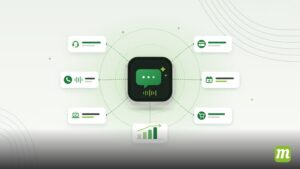
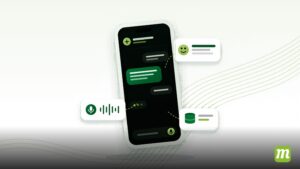
In practice, a conversational AI system interprets intent from free-form input, remembers what was said earlier in the conversation, pulls answers from company knowledge, and can carry out actions through integrations. The same understanding layer can serve a website chat widget, a WhatsApp assistant and a phone line. For a full walkthrough of the components, see what conversational AI is and how it works.
What is the main difference between conversational AI and a chatbot?
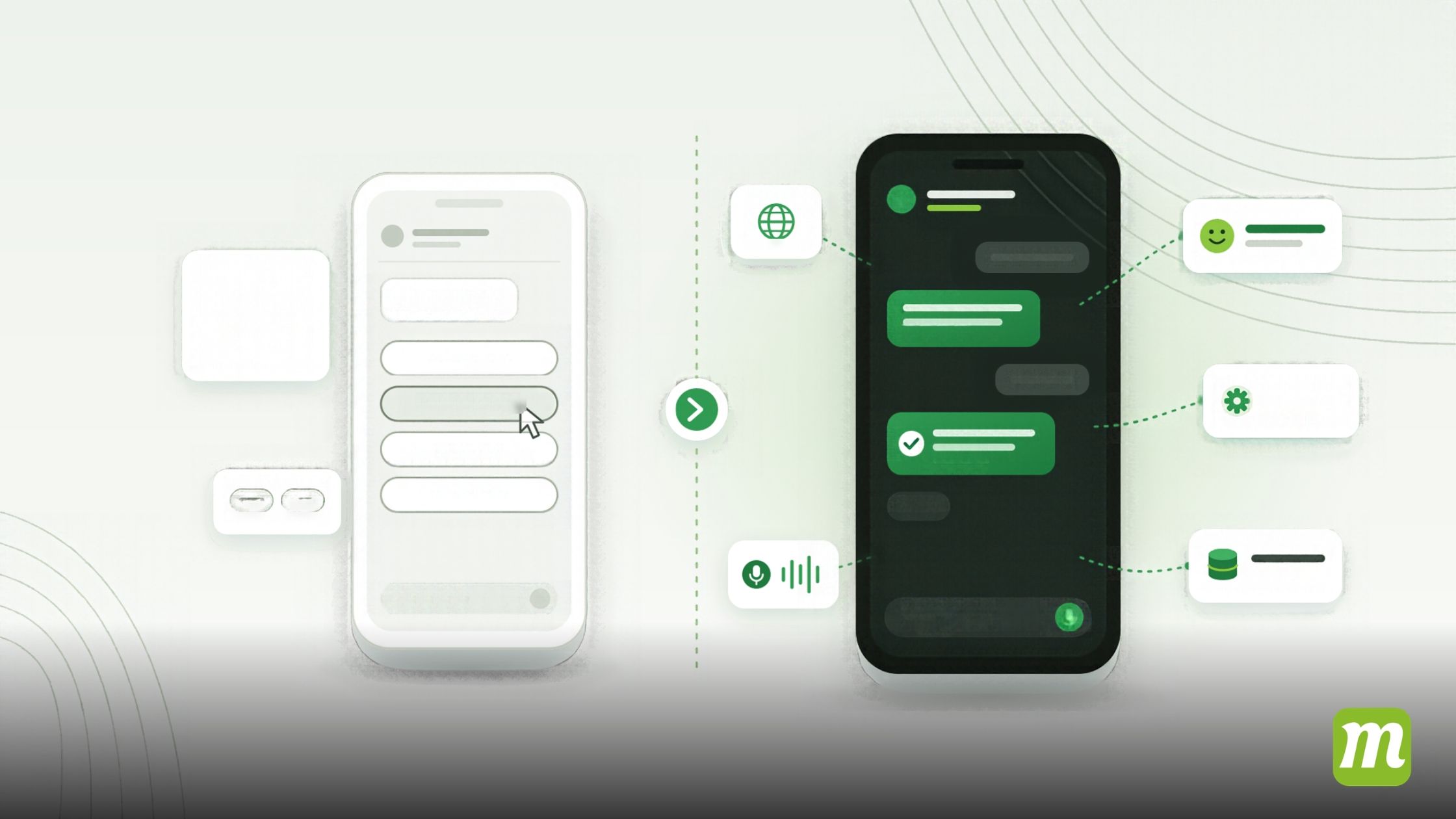
The main difference is that a chatbot is a type of interface, while conversational AI is the intelligence that lets an interface understand language and context. A chatbot can be built with or without conversational AI.
A useful way to picture it: a rules-based chatbot is like a phone menu written as text, while a chatbot powered by conversational AI behaves more like a trained service representative who understands the question however it is phrased. Conversational AI also extends well beyond chat windows to voice assistants, smart speakers, in-app copilots and AI agents.
How do conversational AI and chatbots compare side by side?
Conversational AI and rules-based chatbots differ most in how they understand input, handle context and scale across channels.
| Factor | Rules-based chatbot | Conversational AI |
|---|---|---|
| How it understands users | Buttons, menus and keyword matching | Natural language understanding and LLMs that interpret intent and entities |
| Context | Little or none between messages | Remembers earlier turns and user details within a conversation |
| Channels | Usually one text channel | Web, mobile, messaging apps, voice and phone from one foundation |
| Answers | Pre-written responses | Generated or assembled from knowledge bases via retrieval-augmented generation |
| Actions | Simple form fills or links | Multi-step tasks through CRM, help desk, ERP and other APIs |
| Languages | Separate scripts per language | Multilingual understanding with a shared logic layer |
| Improvement | Manual script edits | Analytics, evaluation and tuning from real conversations |
| Setup effort and cost | Low | Moderate to high, depending on integrations and channels |
| Predictability | Very high | High when grounded and guarded; needs testing and monitoring |
When is a simple chatbot enough?
A simple rules-based chatbot is enough when the conversation is short, the questions are predictable and the answers rarely change.
- Answering a small set of FAQs such as opening hours or return windows
- Guiding users to the right page or form
- Collecting a few fixed details before routing to a person
- Campaign or event bots with a short lifespan
In these cases the extra cost of an AI layer may not pay back. A focused build through AI chatbot development can still use light NLP to handle common phrasing without the full conversational AI stack.
When do you need conversational AI?
You need conversational AI when users ask questions in many different ways, expect help across several channels, or need the assistant to complete tasks rather than point to a page.
- High volume and variety: support teams handling thousands of loosely worded questions about orders, accounts or policies.
- Voice channels: replacing touch-tone phone menus with callers stating their needs in their own words.
- Transactions: rescheduling appointments, updating records, processing returns or resetting passwords with proper verification.
- Knowledge-heavy answers: questions whose answers live in long manuals, policies or product catalogs.
- Multilingual audiences: serving customers in several languages without maintaining separate bots.
The economic case is strongest in customer service. Gartner projected that conversational AI in contact centers would reduce agent labor costs by $80 billion in 2026, and noted that even partial automation, such as capturing a caller’s details up front, could save up to a third of an agent’s time on an interaction.
Where do AI agents fit in the conversational AI vs chatbot debate?
AI agents are the next step beyond conversational assistants: they use conversational AI to understand a request, then plan and execute several actions across systems to resolve it.
Where a chatbot answers and a conversational assistant answers and performs a defined task, an agent can, for example, check a policy, verify eligibility, update a booking and send a confirmation in one exchange, with permissions and approvals set for each tool. Gartner predicts that agentic AI will autonomously resolve 80% of common customer service issues without human intervention by 2029, cutting operational costs by 30%. Read more in agentic conversational AI, or see InnovationM’s AI agent development services.
How do you choose between a chatbot and conversational AI?
Choose based on the conversations you need to handle, not on the label a vendor uses. A short checklist helps.
- Review real conversations. Pull
- a sample of chat logs, emails or call transcripts and group them by request type and phrasing variety.
- Count the actions. List which requests need data lookups or system updates, and which only need information.
- Map the channels. Decide whether voice, messaging apps or in-app assistance belong in the first release or later.
- Set risk boundaries. Identify steps that must stay scripted, such as payments, identity checks and regulated disclosures.
- Define success metrics. Track resolution rate, containment, handoff quality and customer satisfaction rather than message counts.
- Compare build options. Weigh platforms against custom development, as covered in build vs buy conversational AI.
If you are evaluating vendors, the shortlist in top conversational AI platforms for enterprise voice and chat compares the leading options.
Partner with InnovationM
InnovationM helps US businesses decide where a simple chatbot is enough and where full conversational AI earns its cost, then builds the right solution. Its teams cover conversation design, LLM and NLP engineering, retrieval over enterprise knowledge, voice integration and connections to CRM, help desk and contact center systems, with monitoring and tuning after launch.
Explore InnovationM’s conversational AI development services or reach out to the team to talk through your use case.
Final Thoughts
The chatbot vs conversational AI question is really a question about scope. A scripted chatbot handles a narrow set of predictable requests well and costs little. Conversational AI handles the messy variety of real language, works across chat and voice, and can complete tasks inside business systems. Many organizations start with a focused bot, learn from the conversations it captures, and move to conversational AI as volume, channels and expectations grow. Starting from real conversation data keeps that decision grounded.
FAQs
Is a chatbot the same as conversational AI?
No. A chatbot is an interface that converses with users, usually by text. Conversational AI is the technology that lets software understand natural language and context. Some chatbots use conversational AI, while many simpler ones rely only on scripted menus and keyword matching.
Is ChatGPT a chatbot or conversational AI?
ChatGPT is both. It is delivered through a chatbot interface and is powered by conversational AI in the form of a large language model. Business assistants built on similar models add company data, integrations, guardrails and human handoff on top.
Which is better for customer service, a chatbot or conversational AI?
For a handful of simple FAQs, a rules-based chatbot can be enough. For high volumes of varied questions, voice calls, multiple languages or requests that require account lookups and updates, conversational AI usually delivers higher resolution rates and better customer experiences.
Is conversational AI more expensive than a chatbot?
Generally, yes. Conversational AI requires language models, integrations, testing and ongoing tuning, so setup and running costs are higher. The return comes from resolving more requests without an agent, so cost should be judged against volume and resolution rate rather than build price alone.
Can an existing chatbot be upgraded to conversational AI?
Often, yes. Teams can add an LLM-based understanding layer, connect a knowledge base through retrieval-augmented generation and integrate back-end systems while keeping proven scripted flows for sensitive steps. Existing chat logs are valuable for designing and testing the upgrade.
What is the difference between conversational AI and an AI agent?
Conversational AI focuses on understanding and responding to language. An AI agent uses that understanding to plan and carry out multi-step tasks across tools and systems, such as checking eligibility and updating a booking, under defined permissions and with human oversight where needed.