

Planning to build a software product may feel easy; however, it becomes difficult the moment you need to find the right developers, designers, QA engineers, and other specialists for your project. And with the global IT Services market projected to generate US$1.57 trillion in revenue in 2026, businesses are increasingly looking for flexible ways to access the technical talent they need without taking on the full cost and complexity of building an in-house team. Hiring an entire team can take months and quickly add up in salaries, benefits, infrastructure, and recruitment costs. That’s where a dedicated development team can make things easier.
A dedicated development team is a group of software professionals hired through an external development partner who work exclusively on your project. Think of them as an extension of your own team. You decide what needs to be built, set priorities, and stay involved in the key decisions, while the team brings the technical skills and resources needed to move the project forward.
But is a dedicated team the right choice for your business? How much does one cost in 2026? And how do you find a team you can actually rely on?
In this guide, we’ll walk you through what a dedicated development team is, when you should consider hiring one, how the model compares with in-house teams and freelancers, what you can expect to pay, and what to look for when choosing a development partner.
Key Takeaways
- This guide explains how to hire a dedicated development team in 2026, from defining your project requirements and choosing the right skills to selecting and onboarding the team.
- How to hire a dedicated development team: Start by defining your project needs, identify a suitable development company or talent provider, evaluate developers based on skills and experience, and onboard the selected team as an extension of your in-house team.
- A dedicated development team is a good option for businesses that need a flexible team of developers working continuously on a long-term software project.
- The dedicated development team model allows businesses to bring in developers, designers, QA engineers, project managers, and other specialists without building an entire in-house team.
- Dedicated development team services can support startups, SMBs, and enterprises with product development, application modernization, software maintenance, and ongoing feature development.
- Businesses can choose dedicated developers based on the technology stack, experience, project requirements, industry knowledge, and level of involvement needed.
- A remote development team can help businesses access specialized technical talent while offering more flexibility in team size and project management.
- The dedicated development team cost depends on factors such as team size, developer expertise, project duration, technology requirements, and the location of the development team.
- Before hiring, businesses should clearly define project goals, required skills, communication expectations, development timelines, budget, and ownership requirements.
- A dedicated team can also work as a team extension, allowing an existing software development team to add specific skills without hiring permanent employees.
- Choosing the right development company is important for long-term projects. Businesses should compare technical expertise, previous projects, communication processes, security practices, scalability, and engagement terms before making a decision.
What is a Dedicated Development Team?
A dedicated development team is an outsourcing model where a business hires an external group of software professionals who work exclusively on their project. The team acts as a full-time extension of an in-house staff, focusing solely on the client’s goals, product vision, and long-term business growth.
Key Roles and Structure
- Software Engineers: Frontend, backend, or full-stack coders who build the product.
- Project Manager: Coordinates daily tasks, sprints, and overall delivery.
- UI/UX Designers: Craft user-friendly interfaces and experiences.
- QA Engineers: Run tests to catch bugs and ensure software quality.
- DevOps Specialists: Manage cloud infrastructure and automated deployments.
Benefits of the Model
- Exclusive Focus: Members work only on your product, unlike freelancers who juggle many clients.
- High Flexibility: You can easily scale the team up or down as project needs change.
- Cost Efficiency: Save money on local hiring, benefits, and office space overhead.
- Direct Control: You manage tasks and direct the workflow just like you would with internal staff.
When to Use This Model
- Long-term Projects: Best for products with evolving scopes that require continuous updates.
- Skill Gaps: Ideal when local tech talent is hard to find or too expensive.
- Fast Growth: Perfect for startups or enterprises needing to launch features quickly.
When Should You Hire a Dedicated Development Team?
You should hire a dedicated development team when building a long-term software product, scaling your roadmap rapidly, or filling critical niche skill gaps that your internal staff cannot cover. It works best for projects with evolving scopes lasting six months or more where you want full management control without the overhead of permanent hiring.
Key Signs It Is Time to Hire
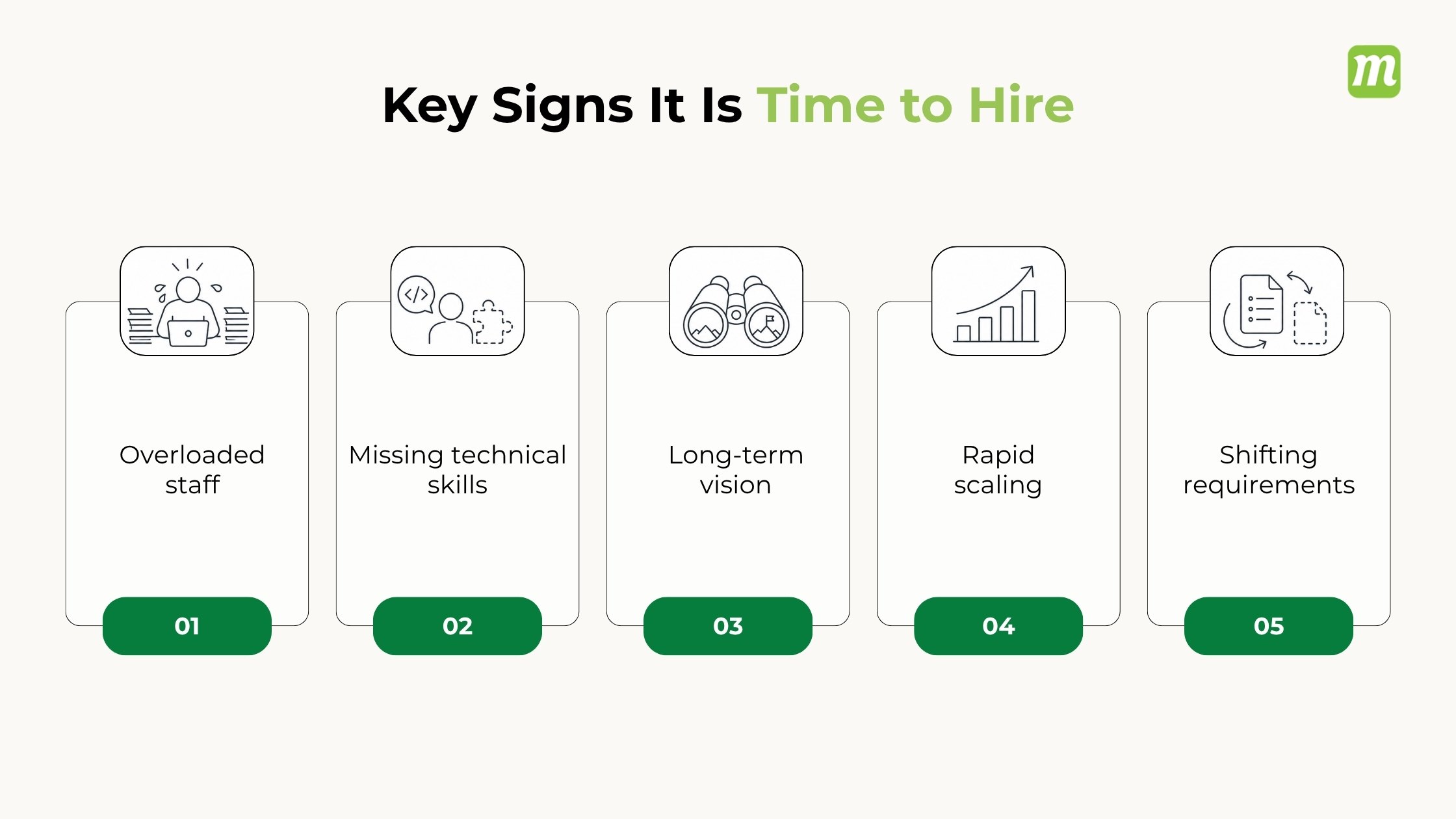
- Overloaded staff: Your current in-house employees are burnt out or missing deadlines because the workload is too high.
- Missing technical skills: Your project needs technical talent with specialized expertise like AI, cloud architecture, or blockchain that your team lacks.
- Long-term vision: You are building an evolving SaaS platform, enterprise tool, or mobile app requiring continuous updates and maintenance.
- Rapid scaling: Your business needs to add engineering capacity in weeks rather than spending months on local recruitment.
- Shifting requirements: The project scope changes frequently, making a rigid fixed-cost outsourcing model inefficient.
When to Avoid a Dedicated Team
- Short-term fixed tasks: If you have a tiny, well-scoped project with a strict deadline and stable requirements, freelancers or project-based agencies work better.
- No internal product owner: If your company has no one to set the product vision, make decisions, or guide daily priorities, the external team will stall.
Dedicated Development Team vs. In-House Team vs. Freelancers
Choosing between a dedicated development team, an in-house team, and freelancers depends on your budget, project scope, timeline, and management capacity. In-house teams offer maximum control and cultural alignment, dedicated teams provide scalable expertise without HR overhead, and freelancers deliver quick agility for short tasks.
In-House Team
- Best for: Core products where technology is your main business pillar and long-term institutional knowledge is vital.
- Pros: Complete control, deepest understanding of company goals, and direct, seamless communication.
- Cons: Extremely high fixed costs (salaries, benefits, hardware) and slow, expensive recruitment cycles.
Dedicated Development Team
- Best for: Growing startups and mid-to-large projects with multi-quarter roadmaps requiring diverse roles (developers, QA, PM).
- Pros: Fast scaling, pre-vetted talent managed via an external partner, lower overhead than full-time staff, and dedicated focus.
- Cons: Less direct physical or cultural integration than internal employees and reliance on a third-party vendor’s management layer.
Freelancers
- Best for: Small, short-term tasks, specific bug fixes, single-page sites, or filling temporary skill gaps.
- Pros: Lowest initial cost, high flexibility, and instant access to niche specialists.
- Cons: Fragmented communication, split attention across multiple clients, and high risk of project disruption if they leave.
How to Hire a Dedicated Development Team
To hire a dedicated development team, first define your project scope, budget, and required tech stack. Next, find providers via platforms like Clutch or GoodFirms, evaluate portfolios, interview candidates, start a small trial phase, and sign a clear contract.
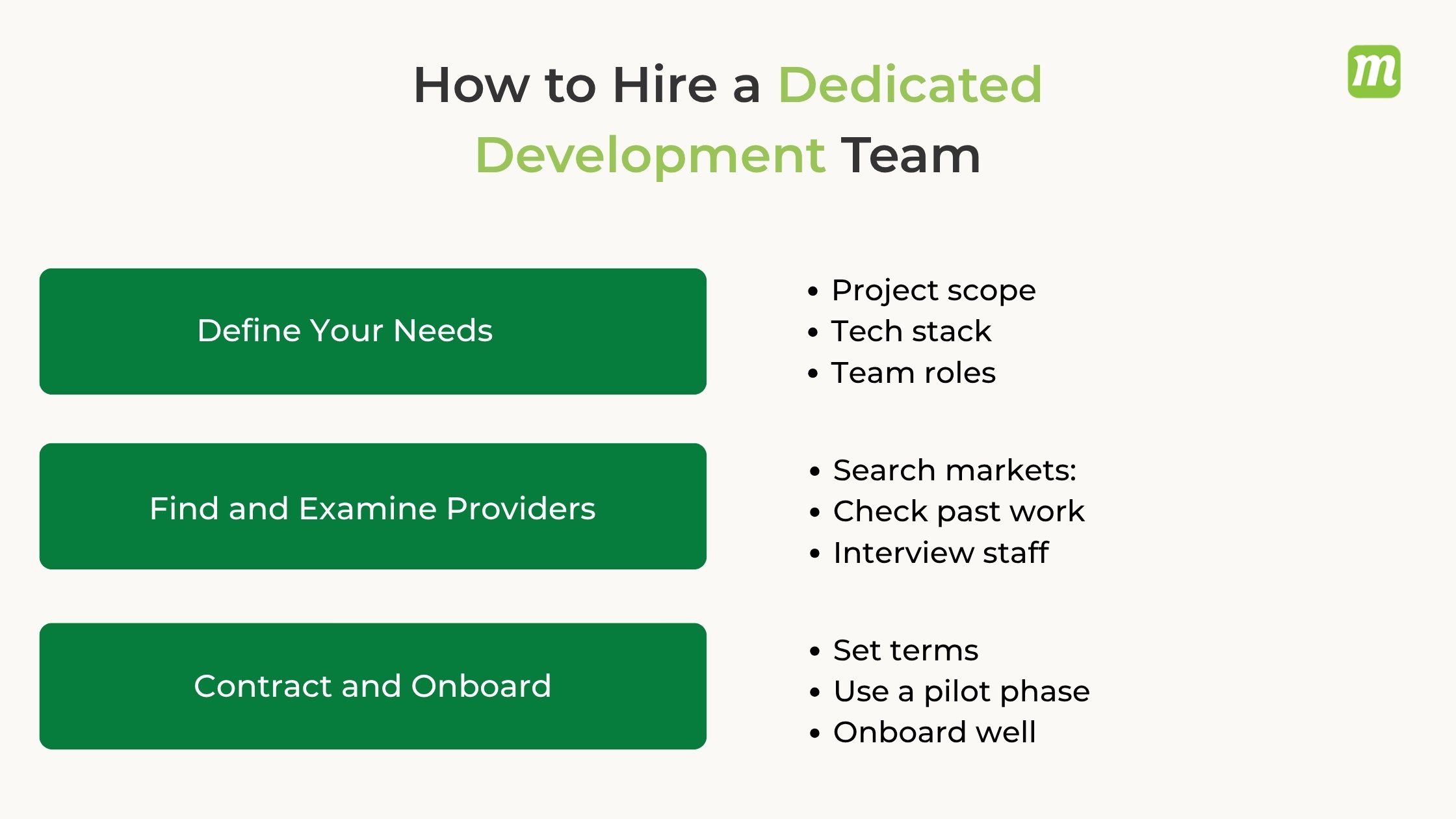
Define Your Needs
- Project scope: Write down your core goals, features, and target dates.
- Tech stack: Choose languages and tools like React, Python, or AWS.
- Team roles: Pick needed roles such as UI/UX designers, backend coders, QA testers, and a project manager.
Find and Examine Providers
- Search markets: Look at agency profiles on Clutch or GoodFirms.
- Check past work: Review case studies and client feedback to verify industry experience.
- Interview staff: Talk directly with the proposed engineers to check technical skills and communication.
Contract and Onboard
- Set terms: Draft a clear agreement covering payment models, timelines, and IP rights.
- Use a pilot phase: Test the team on a small task before signing a long-term deal.
- Onboard well: Give them access to tools like Jira, GitHub, and Slack to sync workflows.
How Much Does It Cost to Hire a Dedicated Development Team in 2026?
The average cost to hire a dedicated development team in 2026 typically ranges from $15,000 to $80,000 per month for a mid-sized team (5–8 specialists), or roughly $2,000 to $15,000 per specialist monthly. Region is the primary driver of this cost, with total annual budgets for a balanced 3–7 person team scaling between $140,000 and $540,000 globally.
Cost Breakdown by Region (Hourly & Monthly)
Hiring nearshore or offshore engineers provides a 40% to 70% savings margin compared to hiring onshore in North America, while removing internal payroll, tool licensing, and benefit overheads.
| Region | Average Hourly Rate | Monthly Cost Per Developer | Regional Advantage |
| North America | $100 – $175 | $16,000 – $28,000 | Same time zone, strict regulatory alignment. |
| Western Europe | $75 – $120 | $12,000 – $20,000 | Strong engineering culture, partial US overlap. |
| Eastern Europe | $45 – $80 | $7,000 – $13,000 | High technical quality, good value-to-cost ratio. |
| Latin America (LATAM) | $35 – $65 | $6,000 – $11,000 | Real-time work overlap for US clients, zero delays. |
| South & Southeast Asia | $25 – $50 | $4,000 – $8,500 | Massively scalable talent pool, lowest entry rates. |
Team Composition & Monthly Cost Impact
The total price shifts based on the scope of the project and the technical roles required. Vendors offering dedicated teams (often called “remote pods”) package their services into three common team scales:
- Small MVP Team (2–4 Devs + QA): Costs $14,000 to $36,000 per month in mid-tier regions like LATAM or Eastern Europe. Ideal for building initial prototypes or working with a clear, small feature scope.
- Mid-Size Team (5–8 Engineers + PM): Costs $35,000 to $80,000 per month. This balanced infrastructure typically includes backend, frontend, and dedicated Quality Assurance (QA) professionals.
- Enterprise Platform Team (9+ Engineers + Architect + PM + QA Leads): Costs $80,000 to $160,000+ per month. This structure handles complex, multi-platform applications, heavy data analytics integrations, or AI-powered services.
Pricing Dynamics by Engagement Model
How you structure the contract also changes the baseline quote:
- Staff Augmentation: $25 – $60/hour. You retain high direct management control, but carry the delivery risk.
- Fully Managed Remote Pod: $60 – $120/hour. The vendor assumes management overhead and delivery responsibility.
- Boutique Specialist Agency: $80 – $150/hour. Best for niche engineering needs (e.g., specific fintech regulations or complex AI training architecture).
Make sure you add an extra 20% to 30% margin over the baseline vendor quote to account for software tooling licenses, internal coordination time, and onboarding structures.
How to Choose the Right Dedicated Development Team Provider
To choose the right dedicated development team provider, define your project requirements, research and shortlist vendors, evaluate technical and industry expertise, interview candidate developers, assess communication and culture, and start with a trial phase.
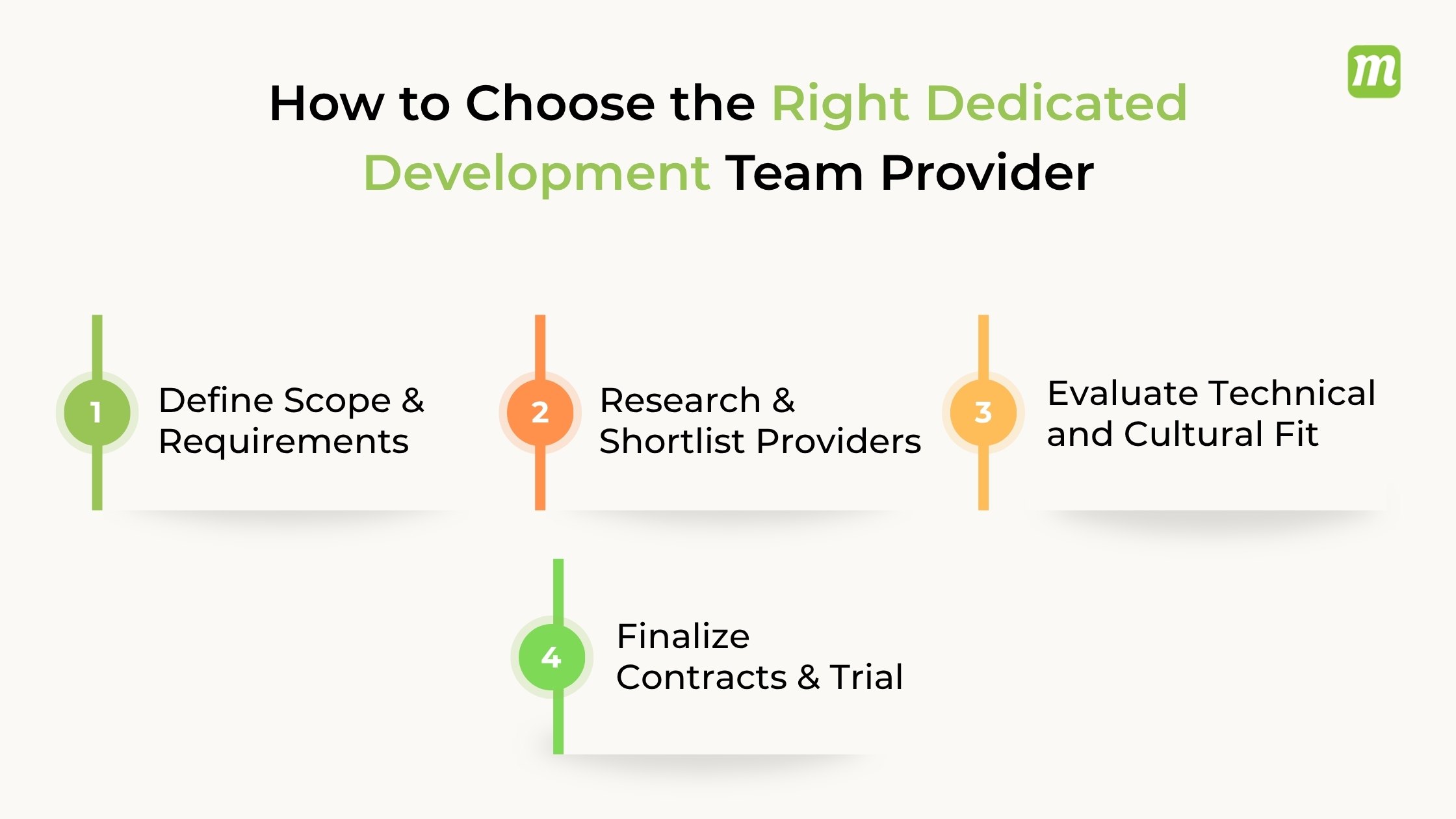
Define Scope and Requirements
- List exact needs: Know your tech stack, required roles (frontend, QA, DevOps), and project goals.
- Set budget and timeline: Establish realistic financial boundaries and delivery targets.
Research and Shortlist Providers
- Look at ratings: Check reviews on platforms like Clutch or LinkedIn.
- Verify industry background: Find vendors who have built similar products or worked in your sector.
Evaluate Technical and Cultural Fit
- Interview the talent: Talk directly to the engineers proposed for your project.
- Check communication: Ensure time-zone overlap and fluent collaboration channels (Slack, Jira).
Finalize Contracts and Trial
- Protect data: Confirm strict NDAs and IP ownership terms.
- Run a pilot: Test the team with a short, paid trial project before committing long-term.
Why Choose InnovationM for a Dedicated Development Team?
Choosing InnovationM for a dedicated development team gives you fast access to vetted tech experts, flexible scaling options, and cost-efficient custom software and mobile app engineering without the hassle of long in-house recruitment cycles.
Key Benefits
- Vetted Tech Talent: Get immediate access to certified software engineers, UI/UX designers, and QA specialists.
- Flexible Scaling: Easily scale your team size up or down based on your current project workloads and business needs.
- Full Control: Maintain direct management control, transparency, and complete visibility over your project workflow.
- Cost Efficiency: Cut down on recruitment overhead, infrastructure setup, and long-term HR costs.
- Technical Breadth: Leverage cross-industry expertise spanning cloud, data engineering, and modern AI-powered applications.
Frequently Asked Questions
1. How much does a dedicated development team cost?
A dedicated software development team typically costs between $15,000 to $80,000 per month, or roughly $4,000 to $15,000 per developer per month, depending primarily on the geographical region and seniority mix. On an hourly basis, global rates generally fluctuate between $18 and $150+ per hour.
2. How long does it take to hire a dedicated development team?
Hiring a dedicated development team typically takes 2 to 4 weeks. This timeline is much faster than traditional in-house recruiting, which often takes 2 to 3 months. The exact speed depends on your project size, technical stack, and how fast you can interview and approve candidates.
3. What roles should a dedicated development team include?
A dedicated software development team typically includes a Product Manager, Project Manager, UI/UX Designer, Software Developers (frontend, backend, or full-stack), Quality Assurance (QA) Engineer, and a DevOps Engineer. Smaller projects may combine some roles, while larger builds add specialists like business analysts or architects.
4. What is the difference between a dedicated team and staff augmentation?
Staff augmentation adds individual professionals to your existing in-house crew under your direct day-to-day management. A dedicated team provides a complete, self-contained external unit (including developers, QA, and a project manager) that handles end-to-end delivery while following your core vision.
5. How do I ensure the quality of a dedicated development team?
To ensure the quality of a dedicated development team, set clear performance metrics, enforce rigorous code reviews and automated testing, maintain transparent communication channels, and use agile delivery cycles. Success depends on tracking actual software output rather than hours worked.
Final Thoughts
Hiring a dedicated development team isn’t just about adding more developers to your project. It’s about finding the right people who can work alongside your business, understand your product, and grow with it over time.
If you’re dealing with an overloaded internal team, struggling to find specialized skills, or need to scale development quickly, a dedicated team can give you the flexibility to move forward without the time and cost of building a large in-house team from scratch.
The most important thing is to choose your development partner carefully. Look beyond hourly rates and take the time to evaluate their technical expertise, past work, communication, security practices, and ability to scale with your needs. A clear agreement and a well-planned onboarding process can make the partnership much smoother from day one.
With the right team in place, you can focus less on finding and managing technical resources and more on building, improving, and growing your product.


